Allahabad High Court: Convictions upheld, sentences set aside
The Allahabad High Court upheld two convictions in a 1980 Sultanpur murder case but set aside the sentences on grounds of juvenility, referring sentencing to the Juvenile Justice Board.
In this article
Listen to this article
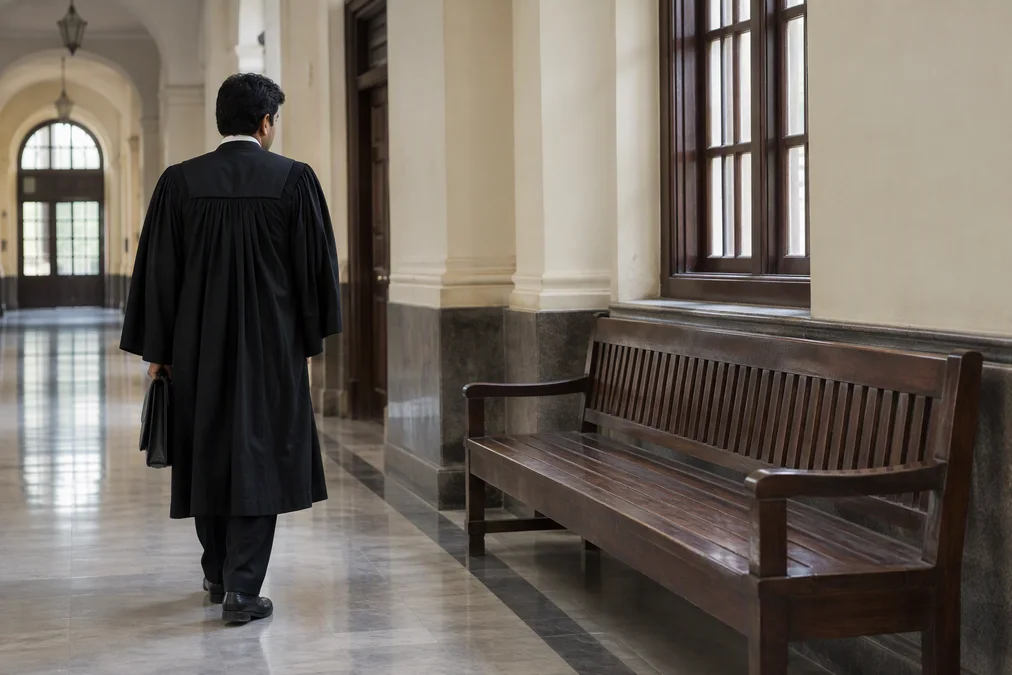
The Allahabad High Court’s Lucknow bench has upheld the convictions of two appellants in a Sultanpur murder case arising from an incident on 28 September 1980, but set aside their sentences after finding that they were juveniles when the offence occurred. Justices Abdul Moin and Pramod Kumar Srivastava referred sentencing to the Juvenile Justice Board. The judgment in Ali Hasan v. State of U.P. records its delivery date as 14 October 2026.
The ruling separates the finding of guilt from the punishment that can lawfully follow. According to LiveLaw’s report, the court accepted that the appellants were respectively 17 years, 10 months and 3 days, and 17 years, 11 months and 3 days old on the date of the incident. Their identities are withheld here because the court found them to have been juveniles.
The decision is not an acquittal. The finding that the prosecution proved the offences remains intact; the Board must now determine the appropriate consequence under juvenile justice law.
The Sultanpur trial and the surviving appeal
The Sessions Judge, Sultanpur, convicted eight accused on 14 December 1981. According to the High Court judgment extract, the prosecution case concerned an attack in Sultanpur following earlier disputes between the two sides. Four people on the complainant’s side were killed, while others sustained injuries.
The trial court imposed life imprisonment for murder under Section 302 read with Section 149 of the Indian Penal Code. Section 302 prescribes punishment for murder; Section 149 concerns the responsibility of members of an unlawful assembly for offences committed in pursuit of its common object, or purpose. It allows the court to consider collective criminal responsibility rather than only the individual act attributed to each participant.
The judgment also records convictions for attempted murder under Section 307, causing hurt with dangerous weapons under Section 324, and voluntarily causing hurt under Section 323. The rioting provisions involved were Sections 147 and 148, the latter concerning rioting while armed with a deadly weapon. These were separate findings accompanying the murder convictions, according to the trial history reproduced by the High Court.
By the time the present decision was delivered, the appeal survived only for the two appellants whose ages were in issue. Paragraph 12 of the supplied judgment extract records that proceedings concerning the other appellants had already abated under earlier orders. Abatement means those parts of the appeal had ended without being decided through this ruling.
Why the convictions remained in place
The defence position at trial differed from the prosecution account. The judgment records that the principal accused attributed the deaths to intervention by villagers after an attack on his side. The remaining accused denied their presence and alleged false implication arising from longstanding village disputes. These were defence submissions, not findings accepted by the court.
According to the judgment extract, the trial court found the injured eyewitnesses’ evidence consistent with the other eyewitness account and the medical evidence. It also accepted the prosecution’s explanation of injuries sustained on the accused side.
At the High Court hearing, counsel for the surviving appellants did not challenge their convictions, but sought cancellation of the sentences and referral to the Juvenile Justice Board. The Additional Government Advocate did not dispute that request, LiveLaw reported.
The bench nevertheless examined the prosecution evidence and found no reason to interfere with the findings of guilt, according to LiveLaw and the PTI report carried by India Today. The relief therefore rested on the appellants’ ages at the time of the offence, not on a failure to establish their participation.
How the court examined the age claims
The age issue was investigated during the appeal rather than accepted solely on the appellants’ assertions. The High Court directed inquiries for the two appellants on 6 January 2017 and 20 September 2023. The Board submitted its reports on 2 February 2017 and 27 November 2023, respectively, according to the judgment extract.
LiveLaw reported that the records included school certificates, registers and examination-related documents. In one inquiry, the complainant’s son objected to the educational certificates, but the prosecution produced no witness supporting those objections. The Board found the documents genuine, according to that report.
The supplied judgment discusses Section 94 of the Juvenile Justice (Care and Protection of Children) Act, 2015, which sets out a process for determining age. Where age is doubtful, the provision gives priority to school or examination-board records, followed by birth records from specified local authorities. Medical age testing is used when the prescribed documentary records are unavailable.
The judgment also reproduces Rule 12 of the juvenile justice rules of 2007, which similarly establishes a documentary hierarchy before medical opinion is sought. The practical purpose is to determine age through evidence relating to birth and education, rather than through appearance or a bare declaration.
Why juvenility could be raised during an old appeal
Section 7A of the Juvenile Justice (Care and Protection of Children) Act, 2000, reproduced in the High Court judgment, permits a claim of juvenility at any stage, including after final disposal of a case.
The provision requires an inquiry and an age finding. If the person was a juvenile when the offence occurred, the court must forward the matter to the Board for an appropriate order, and the sentence already imposed has no effect. The relevant question is therefore age at the time of the offence, not age when the appeal is heard.
A comparable distinction appears in the Supreme Court’s decision in Mumtaz @ Muntyaz v. State of U.P. (Now Uttarakhand). That judgment explains how Section 20 of the 2000 Act operated in pending proceedings: the court could complete its examination of guilt, while referring the question of the appropriate order to the Board once juvenility was established.
This background explains why a long-pending criminal appeal can produce both an upheld conviction and a cancelled sentence. It does not establish what particular punishment the Board must select in the Sultanpur case.
Conflicting details in the available reporting
The supplied accounts contain discrepancies. PTI’s report, carried by ThePrint, says the order was passed on Thursday. The judgment’s first page instead expressly records delivery on 14 October 2026; that documentary date is used here.
LiveLaw’s summary refers to one death, whereas the supplied judgment extract describes four deaths on the complainant’s side, consistent with PTI’s account. The judgment is followed on that point.
LiveLaw also attributes to the court a statement that the Juvenile Justice Act, 1986, was in force when the incident occurred in 1980. That chronology is inconsistent on its face. The supplied judgment extract ends before the final sentencing discussion, so the precise context of that reported statement could not be verified.
Live research was not available for this article. The reporting rests on the supplied judgment extract and reports; the complete operative order was not independently retrieved. The accounts carried by India Today, Hindustan Times and ThePrint derive from PTI and are not separate independent confirmations.
Board appearance fixed for 28 October
The appellants must appear before the Juvenile Justice Board on 28 October 2026, according to LiveLaw. PTI’s account says they must produce a certified copy of the judgment, meaning an officially authenticated copy, and that the Board must pass its order within six weeks of receiving it.
The supplied material does not establish the appellants’ present custody status or the punishment the Board will impose. The Board’s sentencing determination remains outstanding.

Please log in to leave a comment.


