BBSSL: Aadhaar authentication approved, use voluntary
BBSSL may use Aadhaar to verify farmers registering and seeking approval on its seed portal, but consent is required and covered services cannot be denied for refusal or inability to authenticate.
In this article
Listen to this article
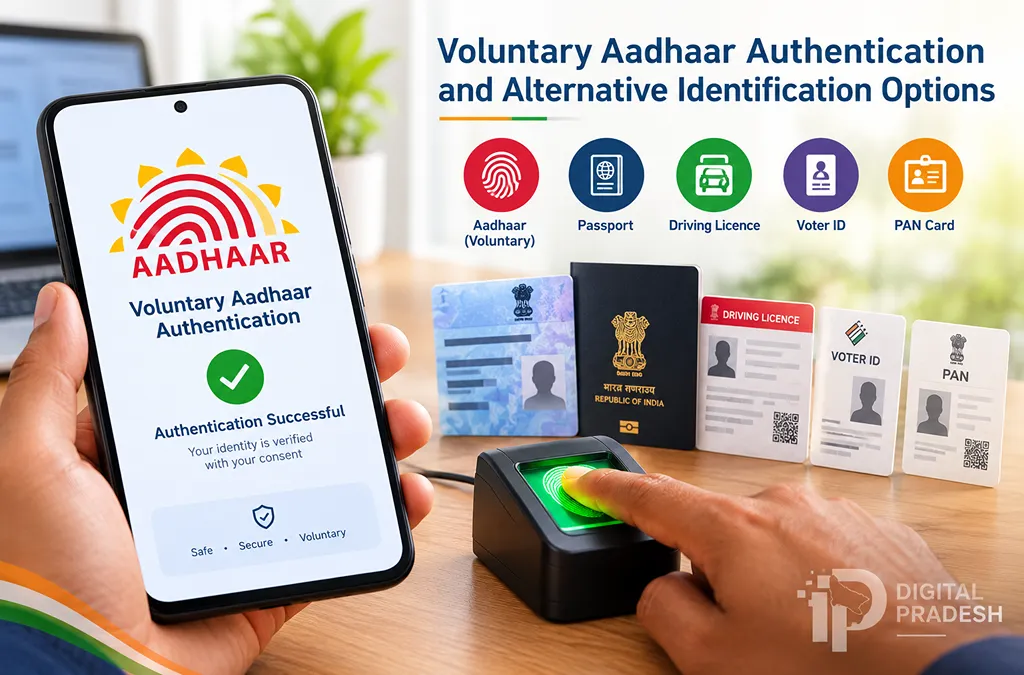
The Ministry of Cooperation has authorised voluntary Aadhaar authentication for farmers registering and seeking approval on Bharatiya Beej Sahakari Samiti Limited’s digital platform. Its notification, S.O. 5674(E), dated 16 October 2026, requires consent and prohibits denial of covered services when an Aadhaar number holder refuses, or is unable, to undergo authentication. It names PAN cards and voter identity cards as alternative means of identification.
The permission is specific to Bharatiya Beej Sahakari Samiti Limited (BBSSL) and its seed procurement and distribution portal. It is not a government-wide change making Aadhaar optional for every service. The notification limits authentication to verifying farmers’ identities during registration and approval, with the stated purpose of ensuring that only genuine farmers participate in procurement and distribution of seed through the portal.
The notification says it comes into force on its publication in the Official Gazette. Its legal basis is Section 4(4)(b)(ii) of the Aadhaar Act, 2016, read with Rule 5 of the Aadhaar Authentication for Good Governance (Social Welfare, Innovation, Knowledge) Rules, 2020. These provisions provide a route for authorising authentication for specified purposes, rather than granting an unrestricted permission to use Aadhaar.
Consent and alternative identification
The notification establishes three safeguards for the authorised use: BBSSL must obtain the Aadhaar number holder’s consent; alternative and viable identification methods must be communicated; and refusal or inability to undergo Aadhaar authentication must not result in denial of a covered service.
The distinction between refusal and inability matters. The protection is not confined to a person who tries to authenticate but cannot complete the process. The notification expressly includes a person who chooses not to undergo authentication. Its listed alternatives are a Permanent Account Number (PAN) card and a voter identity card.
This does not remove identity verification from BBSSL’s registration and approval process. Instead, the notification permits Aadhaar as a voluntary method for that process while providing alternative identification routes. Its stated objective of verifying farmers’ identities must therefore be read alongside, not in place of, the consent and non-denial conditions.
The ministry’s opening explanation says using Aadhaar can reduce the need for multiple identity documents, simplify processes and promote transparency and efficiency. Those are the government’s stated reasons for enabling authentication; the operative provisions still make its use voluntary for this purpose.
A specific authorisation under existing rules
Voluntariness is not a principle introduced for the first time by this notification. Rule 3(2) of the Good Governance Rules already says authentication for the purposes covered by those rules shall be voluntary. The BBSSL notification applies that framework to a particular organisation and a defined activity.
The rules identify several permissible purposes, including digital platforms for good governance, better access to services, preventing dissipation of social welfare benefits, and enabling innovation and the spread of knowledge. The ministry identifies the digital-platform purpose as the basis for BBSSL’s authorisation.
The approval process also distinguishes an organisation’s request from permission to begin authentication. Under Rule 4, as amended on 31 January 2025, an entity other than a Central or State government ministry or department must submit a justified proposal to the appropriate ministry or department. That proposal must address a purpose listed in Rule 3 and the interest of the State.
If the ministry or department considers those requirements satisfied, it forwards the proposal with its recommendations to the Central Government for referral to the Unique Identification Authority of India (UIDAI). Rule 5 then requires UIDAI to assess whether the proposal accords with the permitted purposes and the Aadhaar Act before the notification stage.
For BBSSL, the Ministry of Cooperation’s notification records an earlier authorisation from the Ministry of Electronics and Information Technology. It says that ministry, after consultation with UIDAI, issued a letter dated 24 April 2026 authorising the Ministry of Cooperation to allow and notify the specified use. The April authorisation and the October notification are separate steps in the recorded process.
MeitY’s proposal guidelines reproduce Section 4(4) of the Aadhaar Act. The provision requires UIDAI to be satisfied that a requesting entity complies with prescribed privacy and security standards, alongside the applicable legal basis for authentication. Permission to authenticate therefore sits within a statutory framework that addresses both purpose and safeguards.
What authentication involves
UIDAI’s Aadhaar Authentication and Offline Verification Regulations, in the version updated on 15 December 2025, define authentication as checking an Aadhaar number together with demographic or biometric information against the Central Identities Data Repository, the central database holding Aadhaar identity information. It is an electronic verification process, distinct from merely presenting an identity document.
The regulations distinguish a Yes/No facility, which returns a matching response without identity information, from electronic know-your-customer, or e-KYC, authentication, which can return demographic information or a photograph. These are different facilities within the wider framework; the BBSSL notification confines the authorised purpose to farmers’ identity verification during registration and approval.
There is a wording difference between the notification’s English and Hindi versions on responsibility for the alternative-identification and non-denial duties. Clause 1(2) in English names the ministry, while the Hindi clause names the agency. Both versions state that authentication is voluntary and list PAN and voter identity cards as alternatives. Clause 1(1) expressly places the obligation to obtain consent on BBSSL.
References
Ministry of Cooperation, S.O. 5674(E), notification dated 16 October 2026, Gazette of India, Extraordinary. Publisher: egazette.gov.in
UIDAI, Aadhaar Authentication for Good Governance (Social Welfare, Innovation, Knowledge) Rules, 2020, updated as on 1 April 2025. Publisher: old.uidai.gov.in
UIDAI, Aadhaar (Authentication and Offline Verification) Regulations, 2021, updated as on 15 December 2025. Publisher: mndc.uidai.gov.in
Ministry of Electronics and Information Technology, Application to MeitY for Allowing Use of Aadhaar Authentication, including proposal guidelines. Publisher: meity.gov.in
Related reading: Government of India: 7 sanctions entries removed, 6 replaced | GIFT City: Bhupendra Patel invites BlackRock to expand services
References
- ‘Y~ m sEUR se EUR q”. egazette.gov.in. https://egazette.gov.in/WriteReadData/2026/277276.pdf. Retrieved 20 October 2026.
- THE AADHAAR AUTHENTICATION FOR GOOD GOVERNANCE (SOCIAL WELFARE . thc.nic.in. https://thc.nic.in/Central%20Governmental%20Rules/Aadhaar%20Authentication%20for%20Good%20Governance%20%28Social%20Welfare%2C%20Innovation%2C%20Knowledge%29%20Rules%2C%202020.pdf. Retrieved 20 October 2026.
- THE AADHAAR (AUTHENTICATION AND OFFLINE VERIFICATION) REGULATIONS, 20211. mndc.uidai.gov.in. https://mndc.uidai.gov.in/images/The_Aadhaar_Authentication_and_Offline_Verifications_Regulations_2021-_Clean_copy-30122025.pdf. Retrieved 20 October 2026.
- Rules | Aadhaar Good Governance Portal. swik.meity.gov.in. https://swik.meity.gov.in/rules. Retrieved 20 October 2026.

Please log in to leave a comment.


