Delhi High Court: Gowns required from 16 November 2026
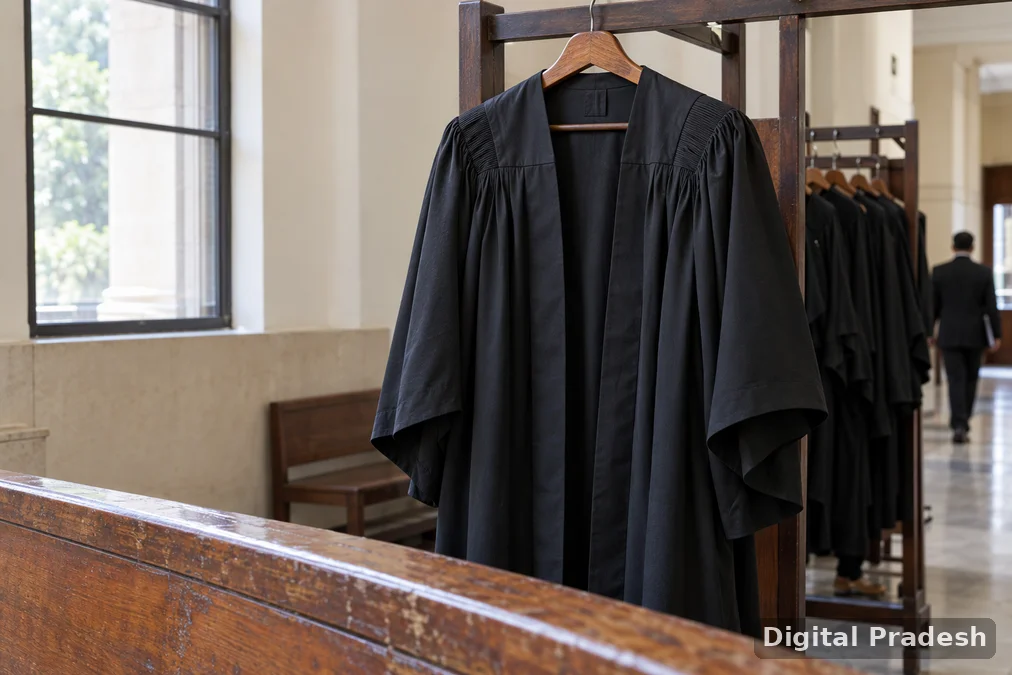
Advocates appearing before the Delhi High Court must wear gowns from 16 November 2026 until further orders, ending the relaxation introduced earlier this year.
In this article
Listen to this article
Advocates appearing before the Delhi High Court will be required to wear gowns from 16 November 2026, according to a notice issued by the court. The requirement will remain in place “till further orders”, with no end date specified.
The notice, signed by Registrar General Reetesh Singh, supersedes the court’s Notice No.742/G-11/Genl.-II/DHC/2026 dated 25 February 2026. It is an administrative direction governing advocates’ courtroom attire, rather than a judgment deciding a dispute between parties. Superseding the earlier notice means replacing its direction with the new requirement.
The Delhi High Court Bar Association’s notice dated 26 February 2026 had informed members that the February court notice dispensed with wearing gowns from March 2026 until further orders. The new direction brings that relaxation to an end from the specified November date.
The scope of the new notice is advocates “appearing before this Court”. It does not announce a corresponding requirement for Delhi’s district courts, nor does it announce changes to other items of advocates’ attire.
How the court will communicate the requirement
The Delhi High Court has directed its Joint Registrar (Listing) to publish the notice on the first page of the daily cause list for three consecutive days immediately. A cause list is the court’s schedule of matters listed for hearing.
The circulation instructions also ask the court’s technology official to upload the notice to its intranet and official website. Copies are addressed to the president and honorary secretary of the Delhi High Court Bar Association and to the court’s notice boards.
Private secretaries attached to the Acting Chief Justice and other judges have been asked to bring the notice to their attention. The forwarding instructions bear the name of Mahender Partap Singh Bisht, Deputy Registrar (General Administration-II).
These are directions for communicating the requirement; they do not establish that each publication or circulation step has already been completed. They place responsibility for publicising the change with the court’s listing, technology and administrative offices, while also informing the advocates’ association.
The notice does not state a reason for selecting 16 November or prescribe a separate penalty for non-compliance. It also does not distinguish between physical and virtual appearances.
The earlier relaxation and Delhi’s past directions
The February 2026 bar association notice, signed by honorary secretary Vikram Singh Panwar, communicated the earlier relaxation by identifying the court’s notice number and date. That same number and date appear in the new court notice as the direction being superseded. The documents therefore connect the exemption and its replacement without relying on an assumption about how long the relaxation was intended to last.
Delhi has previously relaxed and subsequently restored the gown requirement. India Legal reported that a Delhi High Court Bar Association statement communicated a relaxation effective from 13 March 2023, until further orders. The publication attributed that decision to the then Chief Justice, Satish Chandra Sharma.
The statement reported by India Legal came from Sandeep Sharma, then secretary of the bar association. It informed members that the Chief Justice had dispensed with wearing gowns. India Legal described the measure as a summer relaxation.
Mint, reporting on information from Bar and Bench, subsequently reproduced a Delhi High Court notice requiring advocates appearing before the court to wear gowns from 1 November 2023 until further orders. That notice superseded Notice No.667/G-11/Genl./DHC dated 6 March 2023. It was a separate direction for 2023, not the effective date of the requirement announced for November 2026.
The court also issued a broader clothing exemption during the COVID-19 pandemic. According to The New Indian Express, an administrative order exempted advocates from wearing gowns, coats, sherwanis, achkans, chapkans and jackets while appearing before the High Court or its subordinate courts through video-conferencing or otherwise.
The New Indian Express reported that the pandemic order required advocates to remain dressed in a sober and dignified manner and adhere to the rest of the prescribed dress code. Unlike the new gown notice, that reported exemption expressly covered both the High Court and subordinate courts and listed several garments.
Gowns and black coats are treated separately
The distinction between a gown and other courtroom clothing matters because the dress rules do not treat every garment identically. A 2024 circular issued by the Andhra Pradesh High Court at Amaravati reproduced provisions of the Bar Council of India dress rules that address gowns and black coats separately.
The circular identified Section 49(1)(gg) of the Advocates Act, 1961 as the statutory basis for those rules. In this context, the provision authorises rules prescribing advocates’ courtroom dress; the detailed clothing requirements appear in the rules rather than in the Delhi notice itself.
According to the rules reproduced in the Andhra Pradesh High Court circular, wearing an advocate’s gown is optional except when appearing in the Supreme Court or a High Court. A separate provision states that wearing a black coat during summer is not mandatory outside the Supreme Court and High Courts.
The circular also reproduced a clarification allowing advocates in courts other than the Supreme Court and High Courts to appear during summer in a white shirt with specified trouser colours and a black tie or band and collar. The relaxation therefore concerned particular garments, not the abandonment of professional courtroom attire.
The Andhra Pradesh High Court made coats and gowns optional during summer for advocates appearing before that state’s district judiciary, citing discomfort and heat-related concerns. It asked the heads of judicial units to communicate the instructions to officers under their control.
That circular concerned a different jurisdiction and level of court; it does not establish an exemption for appearances before the Delhi High Court. The Delhi notice sets no seasonal end date for its own requirement: any subsequent change is left to further orders of that court.

Please log in to leave a comment.