Jalpaiguri Circuit Bench: Urgent vacation filings, video hearings
Calcutta High Court has listed a notice covering urgent filings and video hearings at its Jalpaiguri Circuit Bench during the vacation from 20 October to 11 November 2026; operational details remain unavailable.
In this article
Listen to this article
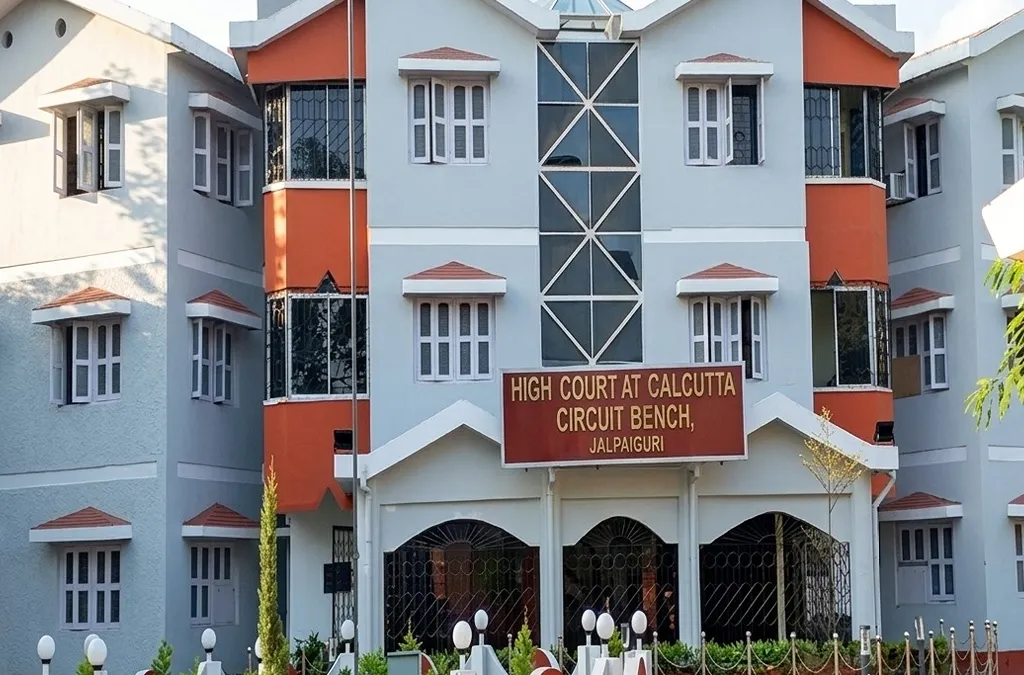
The Calcutta High Court has listed a notice on facilities for filing urgent cases and hearing urgent matters through video conferencing at its Jalpaiguri Circuit Bench during the annual vacation from 20 October 2026 to 11 November 2026. The notice is dated 19 October 2026 and was uploaded to the court’s notices page that evening.
The court’s listing identifies two functions covered by the arrangements: accepting urgent case filings and hearing urgent matters by video link. It concerns urgent work during the vacation, rather than announcing a return to the ordinary hearing schedule.
The same notices page separately lists a daily cause list for the Jalpaiguri Circuit Bench dated 22 October 2026, uploaded on 16 October 2026. A cause list is the court’s schedule of matters listed for hearing. The entry establishes that a list has been issued for that date, but does not identify the individual cases or the judges assigned to them.
Different notices serve different purposes
The dates in the Jalpaiguri notice differ from those in the High Court’s broader vacation notification. Notification No. 5240-RG, dated 13 October 2026, concerns the nomination of judges to take up judicial matters during the High Court at Calcutta’s annual vacation from 16 October 2026 to 11 November 2026, according to the court’s notices page. The Jalpaiguri facilities notice specifies a period beginning on 20 October 2026.
These entries address different arrangements: one concerns the nomination of vacation judges, while the other concerns urgent filing and video-hearing facilities at the circuit bench. Their starting dates should not be treated as interchangeable.
The notices page also lists vacation cause lists for the High Court’s Appellate Side and Original Side dated 22 October 2026. These are separately identified schedules, not substitutes for the Jalpaiguri daily cause list.
The full Jalpaiguri facilities notice is not available in the material reviewed for this report. Its published description does not specify filing hours, submission channels, the video-conferencing platform, the judges handling urgent requests or the procedure for placing a request before them. It establishes the subject and stated period of the arrangements, but not those operational details.
What the earlier video-conferencing rules provide
The High Court framed its “Rules for Video Conferencing for Courts” through Notification No. 3097-G, dated 16 December 2021, published in The Kolkata Gazette on 24 December 2021. The notification stated that the rules would apply to the courts, proceedings and dates separately notified by the High Court. This earlier procedural framework is distinct from the Jalpaiguri vacation notice and does not, by itself, establish the specific arrangements for these vacation hearings.
Under Rule 3 of that text, video conferencing may be used at all stages of judicial proceedings. Hearings conducted by video link remain judicial proceedings: the courtesies and protocols of a physical courtroom apply even when participants are not in the same room. The rule also prohibits unauthorised recording by any person or entity.
The rules distinguish between the “Court Point”, where the court is convened, and the “Remote Point”, where a participant appears through a video link. A remote participant may therefore be virtually present before the court without being physically inside its courtroom. The rules define designated video-conferencing software as software provided by the High Court from time to time; they do not name a single permanent platform.
Rule 4 recommends internet-connected equipment, cameras, microphones and speakers, an uninterrupted power supply, adequate lighting, and a quiet, secure space. These provisions address both whether participants can communicate clearly and whether the surroundings are suitable for court proceedings.
The framework assigns preparatory responsibilities to coordinators. Rule 5.1 provides for coordination at the court and remote locations, while qualifying that a remote-point coordinator may be required only when a witness or an accused person is to be examined. The arrangements for taking evidence should therefore not be assumed to apply identically to every advocate making oral submissions.
For proceedings involving examination, the remote-point coordinator’s duties include preventing unauthorised entry and recording. The coordinator must also ensure that the person being examined is not prompted, tutored or coerced, and does not consult documents or devices without the court’s permission. These are safeguards for the evidence being given, not merely technical checks on the connection.
Requests, advance documents and accessibility
The earlier rules describe a request-based process for video participation. Rule 6.1 allows a party or witness to seek video conferencing using the prescribed form, except where the court initiates the arrangement. Rule 6.2 says a proposal should first be discussed with the other parties, but recognises exceptions where discussion is impossible or inappropriate, including urgent applications.
That exception concerns prior discussion with another party. It is not a statement in the Jalpaiguri notice that every urgent filing will automatically receive a video hearing. The specific procedure for obtaining such a hearing is not set out in the notice’s published description.
For witness evidence, Rule 6.3 describes judicial consideration of the request after hearing both sides. It addresses delay, expense and the interests of justice, with reasons recorded and any costs specified. Rule 6.4 allows the court to fix the video-conferencing schedule when granting the request.
For oral submissions, Rule 6.5 permits the court to require an advocate or a person appearing without a lawyer to send written arguments and relevant precedents beforehand to its official email address. Precedents are earlier judicial decisions relied on to support a legal argument. The provision describes a requirement the court may impose, not an advance-document requirement established for every Jalpaiguri vacation hearing.
The rules also address assistance for people being examined. Rule 5.9 provides for the court to order a translator where a person does not understand its official language, a sign-language expert for a person with speech or hearing impairments, or an interpreter or special educator where required.
Separately, the official eCourts Services page for the Jalpaiguri Circuit Bench provides sections for case status, orders and judgments, and cause lists. Search options include case number, party name, advocate name and filing number. These are case-information services; the page does not itself establish the submission channel for the urgent filings covered by the vacation notice.
The next dated Jalpaiguri hearing schedule identified in the supplied notices listing is the daily cause list for 22 October 2026. Which matters and judges appear on that schedule cannot be established from the listing entry alone.
Related reading: 10 Coronavirus free Countries where you would like to go on vacation after the pandemic | Hobbies for the Students to Invest their time in this Summer Vacation
References
- Calcutta High Court – Notices. calcuttahighcourt.gov.in. https://www.calcuttahighcourt.gov.in/Notices/All. Retrieved 21 October 2026.
- High Cour 3097 Appellate SidE – S3WaaS. cdnbbsr.s3waas.gov.in. https://cdnbbsr.s3waas.gov.in/s3ec05240c945bb72980130446fc2b40fb/uploads/2024/01/2024012133.pdf. Retrieved 21 October 2026.
- Calcutta High Court – Circuit Bench At Jalpaiguri. hcservices.ecourts.gov.in. https://hcservices.ecourts.gov.in/ecourtindiaHC/index_highcourt.php?court_code=2&dist_cd=1&stateNm=Calcutta&state_cd=16. Retrieved 21 October 2026.

Please log in to leave a comment.


