Yes Bank: Supreme Court rejects AT1 bond write-down appeals
Yes Bank said the Supreme Court upheld the reversal of its Rs 8,415 crore AT1 bond write-down. The bank is reviewing the judgment and its financial implications; no payment timetable was disclosed.
In this article
Listen to this article
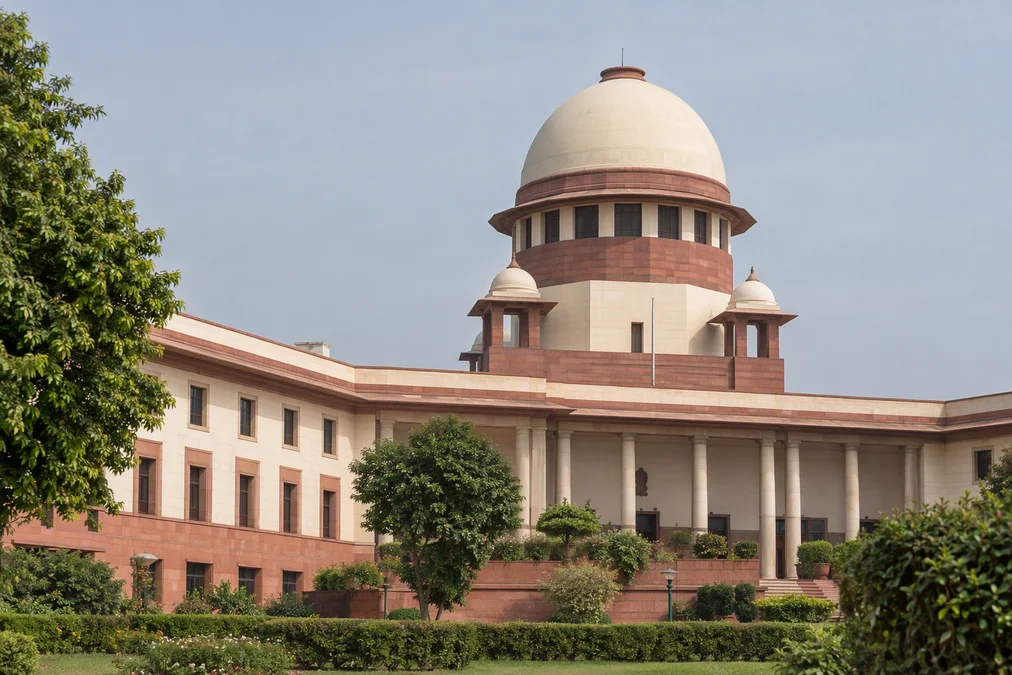
Yes Bank said the Supreme Court of India dismissed appeals by the bank, the Reserve Bank of India (RBI) and the Union of India on 15 October 2026, upholding the Bombay High Court judgment that set aside the write-down of Rs 8,415 crore of Additional Tier-1 (AT1) bonds. The bank disclosed the outcome to the stock exchanges on 16 October 2026, saying it was examining the judgment and evaluating its legal options.[1]
The ruling concerns the administrator’s decision to write down the bonds during Yes Bank’s reconstruction in March 2020. According to the bank’s disclosure, the Supreme Court also vacated any interim order and directed that annual coupon payments remain governed by the bonds’ Information Memoranda, the documents setting out their terms.[1]
For bondholders, the reported outcome preserves the High Court’s decision against the write-down. Yes Bank provided a provisional estimate of the effect of reinstating the bond principal on its capital ratios, but said it was still reviewing the order’s financial and operational implications.[1]
How the Rs 8,415 crore dispute arose
The Supreme Court judgment in Yes Bank Limited & Anr. v. Axis Trustee Services Limited & Ors., with connected appeals, records two bond issuances: Rs 3,000 crore on 23 December 2016 and Rs 5,415 crore on 18 October 2017. Axis Trustee Services was appointed trustee for both issuances.[2]
AT1 bonds are instruments that banks issue to raise regulatory capital. These bonds were issued as non-convertible debentures and were governed by the RBI’s Master Circular on Basel III Capital Regulations, the framework at the centre of the dispute. The litigation concerned whether the administrator had the authority to write them down and whether the action complied with that framework and the bond terms.[2]
The judgment records that, after Yes Bank’s financial position deteriorated, the Central government imposed a moratorium on 5 March 2020 under Section 45 of the Banking Regulation Act, 1949. That provision was also the statutory basis for the bank’s reconstruction. On the same day, the RBI appointed an administrator under Section 36ACA, replacing the board of directors to oversee the bank.[2]
A draft reconstruction scheme was published on 6 March 2020, with public comments invited by 9 March 2020. The Central government notified the final Yes Bank Limited Reconstruction Scheme, 2020 on 13 March 2020. The administrator wrote down the AT1 bonds on 14 March 2020 and communicated the action to the exchanges.[2]
Bondholders challenged that action through several writ petitions. The Bombay High Court set it aside in its judgment of 20 January 2023, which became the subject of the Supreme Court appeals.[2]
The clause removed from the final scheme
A central dispute was the difference between the draft reconstruction scheme and the notified version.
The draft expressly provided that Yes Bank’s instruments qualifying as Additional Tier-1 capital would be permanently written down in full. The final scheme omitted that paragraph. It instead retained provisions preserving contracts, bonds, liabilities and creditors’ rights, except where the scheme expressly provided otherwise, according to the scheme extracts reproduced in the Supreme Court judgment.[2]
The respondents argued that the omission left the administrator without authority under the reconstruction scheme to write down the bonds. The Supreme Court judgment identifies this as the primary ground on which the High Court had accepted the challenge.[2]
The Supreme Court bench comprised Justices Dipankar Datta and Augustine George Masih, according to Bar and Bench. Its report says the court held that the administrator lacked authority to extinguish the bonds after the reconstruction scheme came into force and had acted under a mistaken understanding of his powers.[3]
The distinction was between a regulatory framework permitting a write-down in specified circumstances and a particular official having the authority to carry it out. According to Bar and Bench, the court said that the power had to be exercised by the competent authority through the prescribed procedure; the financial necessity of rescuing the bank did not justify departing from that procedure.[3]
Financial consequences did not replace the legal test
The parties advanced competing arguments about what reversing the write-down would mean.
The appellants argued that allowing the High Court judgment to stand could cause severe financial disruption, affect the wider banking system and undo the reconstruction exercise. The respondents argued that Yes Bank’s financial position had improved above regulatory requirements and that the decision setting aside the write-down should therefore remain in place. These were the parties’ submissions, as recorded in the Supreme Court judgment.[2]
The court declined to resolve the case simply by considering later developments. In paragraphs 15 and 16, it said the administrator’s action had to be tested against the facts and law applicable when it was taken on 14 March 2020. Subsequent changes in circumstances could not determine whether that administrative action was valid at the time.[2]
That approach separated the question of legal authority from the parties’ competing accounts of the bank’s later financial condition.
What the bank disclosed about capital and payments
Yes Bank’s exchange filing estimated that reinstating the AT1 bond principal would have an approximately 250-basis-point impact on its Common Equity Tier-1 (CET1) ratio, including profits, using the position as on 30 June 2026.[1]
CET1 measures a bank’s core equity capital against its risk-weighted assets. Yes Bank described its estimate as pro forma: an illustration of the effect of reinstatement on the stated reporting-date position, rather than a newly reported actual ratio. It said its broader Tier-1 ratio would remain unaffected at 14.0 per cent on that basis.[1]
The bank said it retained flexibility to take additional capital-management measures to pursue its growth objectives. It did not announce a specific capital-raising transaction in the disclosure.[1]
On payments, the order as reproduced in the filing says annual coupons, meaning the bonds’ interest payments, must be made according to the Information Memoranda and remain unaffected by the appeals’ outcome. It also leaves each party to bear its own legal costs and permits pending proceedings to continue without being influenced by the judgment.[1]
The disclosure does not specify a payment timetable or quantify a total coupon liability. Yes Bank said it would make further disclosures after reviewing the order and its implications.[1]
References
- YES BANK Limited. Disclosure regarding judgment of the Hon’ble Supreme Court of India in relation to Additional Tier-1 Bonds. 16 October 2026. https://nsearchives.nseindia.com/corporate/YESBANK_16102026084642_YBL_Stock_Exchange_Intimation_AT-1_Judgement_Oct_2026.pdf
- Supreme Court of India. Yes Bank Limited & Anr. v. Axis Trustee Services Limited & Ors. and connected appeals, 2026 INSC 1132. 15 October 2026. https://api.sci.gov.in/supremecourt/2023/6245/6245_2023_6_1501_75512_Judgement_15-Oct-2026.pdf
- Bar and Bench. Supreme Court raps RBI; says it stood as a bystander while YES Bank operated clandestinely.

Please log in to leave a comment.


