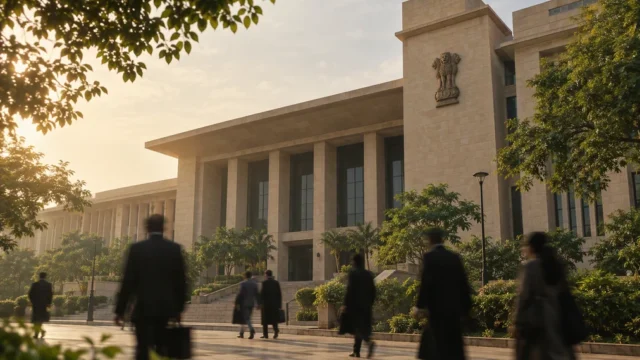
Supreme Court of India Rules on Preliminary Inquiry in Complaints
The Supreme Court of India clarified that a preliminary inquiry is not required before filing complaints for specific offences, streamlining legal procedures.

In this article
The Supreme Court of India ruled on 11 October 2023 that a preliminary inquiry is not mandatory under Section 340 of the Code of Criminal Procedure (CrPC) before filing a complaint for certain offences. The ruling came from a three-Judge Bench consisting of Justice Sanjay Kishan Kaul, Justice Abhay S. Oka, and Justice Vikram Nath. This decision clarifies procedural requirements related to allegations of forgery in civil proceedings.
The case arose from a criminal appeal where the High Court had granted relief to the respondent, citing that a First Information Report (FIR) was filed without a preliminary inquiry and without providing an opportunity for the accused to be heard. The High Court’s view was that these steps were mandatory under Sections 340 and 195 of the CrPC. The Supreme Court addressed this position by examining prior rulings, including Pritish v. State of Maharashtra and Iqbal Singh Marwah v. Meenakshi Marwah, which established that a preliminary inquiry is discretionary.
The Court held that the purpose of a preliminary inquiry is to determine whether it is expedient to initiate proceedings in the interest of justice, rather than to ascertain guilt. It also noted that a proposed accused does not need to be afforded a hearing before a complaint is lodged. The judgment emphasized that the legal position established by the Constitution Bench’s ruling in Iqbal Singh Marwah prevails, thereby setting a clear standard on the issue.
The matter originally referred to the Supreme Court on 26 February 2020 raised two questions: whether Section 340 mandates a preliminary inquiry and whether an opportunity to be heard is required before a complaint is made under Section 195. The Supreme Court answered these questions in the negative, thereby resolving the conflicting interpretations that had previously emerged.
In its decision, the Supreme Court clarified that the expediency of a preliminary inquiry should be judged based on the impact of the alleged offence on the administration of justice, rather than the severity of the injury suffered by the affected party. The Court directed that the case be placed before a regular bench for further consideration on its merits.
This ruling is significant as it streamlines the process for dealing with complaints related to forgery and clarifies the procedural expectations for courts in such matters. The implications of this ruling may affect future cases involving similar allegations and procedural disputes in India.