DGFT: Opens 2027 quota applications for UK vehicle imports
DGFT has opened applications for 2027 vehicle import quotas under India-UK CETA. The window runs from 6 to 21 November 2026; individual allocations have not been announced.
In this article
Listen to this article
The Directorate General of Foreign Trade (DGFT) has invited fresh applications for tariff-rate quotas under the India-United Kingdom Comprehensive Economic and Trade Agreement (CETA) for calendar year 2027. Its public notice opens the application window from 6 November to 21 November 2026 for specified vehicle imports into India.
The notice, digitally signed by Director General of Foreign Trade Lav Agarwal on 6 November 2026, concerns allocation of quotas that allow eligible imports to receive preferential customs duties. It is an invitation to apply, not an announcement of allocations to individual importers.
DGFT issued the notice under paragraphs 1.03 and 2.04 of the Foreign Trade Policy, 2023. It states that imports of the specified products will remain governed by the arrangements in Annexure-VII of Appendix 2A, notified through Public Notice No. 19/2026-27 dated 9 July 2026.
What the vehicle quotas cover
A tariff-rate quota, or TRQ, makes a specified quantity of imports eligible for a preferential customs duty. Economic Laws Practice, in its July 2026 explanatory note on the agreement, distinguishes this in-quota rate from the non-preferential or separately specified out-of-quota rate applicable beyond that quantity.
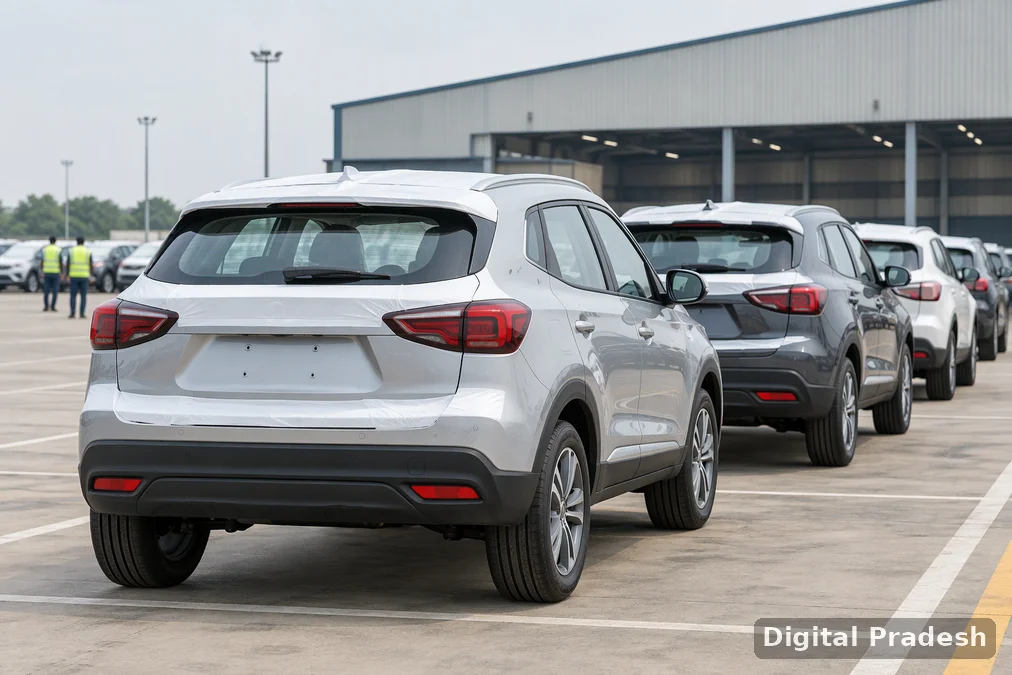
The November DGFT notice includes passenger vehicles imported as completely built units, meaning finished vehicles rather than vehicles brought in for assembly. Its passenger-vehicle description requires that they have not been registered anywhere before importation.
The agreement’s Annex 2A, published by the Ministry of Commerce and Industry, sets out separate quota commitments for internal-combustion-engine passenger cars. These are vehicles powered by petrol or diesel engines. The schedule divides them into three engine-capacity bands, with different quota sizes and tariff rates.
The UK government’s page on the agreement’s trade-in-goods chapter records that CETA entered into force on 15 July 2026. Under Annex 2A, the first agreement year runs from entry into force until 31 December of that year, and each subsequent year follows the calendar year. On that basis, 2027 is the second year of the tariff schedule.
For year two, Annex 2A provides a total quota of 24,500 completely built internal-combustion-engine passenger cars originating in the UK. Of these, 12,500 places are for petrol cars with engines exceeding 3,000 cc and diesel cars exceeding 2,500 cc. The scheduled in-quota customs duty for that group is 25 per cent.
The same schedule provides 6,000 places for the middle engine-capacity band, extending up to 3,000 cc for petrol vehicles and 2,500 cc for diesel vehicles, and another 6,000 for vehicles up to and including 1,500 cc. Both groups carry a scheduled year-two in-quota duty of 40 per cent.
These are commitments in the agreement’s tariff schedule, rather than a statement that all vehicle imports receive those rates. Annex 2A expressly limits TRQ tariff concessions to the specified volumes and subjects the relevant products to the corresponding conditions.
Economic Laws Practice also notes that imports claiming the concessions remain subject to the relevant Ministry of Finance notification. Quota allocation and the customs treatment of an import are therefore distinct parts of the framework described in its analysis.
Applications remain under the July framework
The November notice sets the new application period but refers back to the July framework for the import procedure. Economic Laws Practice’s account of that framework says applications are restricted to the original equipment manufacturer, or its authorised dealer or channel partner in India.
According to the firm’s July note, applicants must have a pre-purchase agreement with the manufacturer of the UK-origin vehicle specifying the proposed import quantity. Applications are filed electronically through DGFT’s Import Management System during the separately notified window.
The same note says successful applicants receive an electronic TRQ certificate identifying the tariff item, quantity and validity period. It describes proportionate allocation where applications exceed the available quota.
Origin is a separate requirement. Economic Laws Practice states that imports claiming the preferential tariff must carry a valid certificate of origin establishing UK origin under CETA. Its note also says quota certificates expire at the end of the relevant calendar year or twelve months after issue, whichever comes first, and that insufficient use of an allocation may reduce an applicant’s allocation in subsequent years.
The agreement itself places obligations on quota administration. Annex 2A requires each country to administer its TRQs transparently, objectively and without discrimination, while seeking to allow importers to use the available quantities fully. It also requires timely publication of relevant information, including the initial quota volume and eligibility criteria.
A separate application round from 2026
DGFT previously extended the application deadline for the 2026 quota round. Public Notice No. 26/2026-27, dated 5 August 2026 and reproduced by the Agricultural and Processed Food Products Export Development Authority, moved that deadline to 9 August 2026 following representations from trade and industry.
That August notice left the other terms of the July notices unchanged. The November invitation concerns fresh applications for 2027, rather than a further extension of the 2026 round.
The distinction also matters for quota quantities. Annex 2A requires the first year’s quota to be proportionately reduced when the agreement enters into force partway through a year; subsequent years run for the full calendar year.
DGFT’s November notice specifies 21 November 2026 as the closing date for the new application window. It does not state when individual quota allocations will be announced.

Please log in to leave a comment.