PMAY-U 2.0: Bihar housing grant sanctioned, Rs 136.72 crore
The Ministry of Housing and Urban Affairs sanctioned the first central instalment for 20 Bihar housing projects. The order authorises conditional releases and does not confirm payment to the state or beneficiaries.
In this article
Listen to this article
The Ministry of Housing and Urban Affairs has sanctioned Rs 13,672.20 lakh as the first instalment of central assistance for 22,787 houses across 20 projects in Bihar under Pradhan Mantri Awas Yojana – Urban 2.0 (PMAY-U 2.0). The ministry’s order, dated 26 September 2026, authorises funding for the 2026-27 financial year, with further assistance conditional on expenditure, construction progress and geo-tagging of houses.
The projects fall under Beneficiary-Led Construction (BLC), the scheme component that supports eligible households constructing houses on their own land. According to the order, the Central Sanctioning and Monitoring Committee (CSMC), which approves and monitors projects under the mission, approved these projects at its eighth meeting.
The document is a “mother sanction”, authorising central assistance for release under specified conditions. It states that funds will be released to Bihar on demand through SNA SPARSH, the designated fund-release system, subject to Department of Expenditure guidelines. The sanction does not itself establish that the entire amount has reached the state or individual beneficiaries.
Bihar must provide the approved matching state contribution and release it on time, the ministry directed. The amount authorised in this order is the first central instalment, not the projects’ total cost or the full assistance available to each household.
Funding for the 20 Bihar projects
The ministry’s funding table allocates Rs 11,325.00 lakh to the component for beneficiaries other than Scheduled Castes and Scheduled Tribes, Rs 2,202.00 lakh to the Scheduled Caste component and Rs 145.20 lakh to the Scheduled Tribe component. These allocations together constitute the sanctioned first instalment.
The purpose recorded in the order is the creation of capital assets – in this case, houses – under PMAY-U 2.0. Bihar and its implementing agencies must use the grant in accordance with the scheme’s approved guidelines. The authorities responsible for the projects must also obtain all applicable statutory and regulatory approvals.
The Press Information Bureau’s background document, “PMAY-U: The Story of Housing, Inclusion and Empowerment”, dated 16 September 2026, explains that BLC supports economically weaker section families constructing new permanent, all-weather houses on available land they own. It describes assistance of up to Rs 2.5 lakh and a maximum carpet area of 45 square metres under this component.
That scheme-level description is separate from the amount authorised by the Bihar order. The September sanction concerns an initial central instalment for the specified projects; it does not record a final payment to each beneficiary.
PIB’s background document places BLC within a wider programme implemented from 2024 to 2029, intended to assist an additional one crore urban poor and middle-class families. Other components support the purchase of affordable houses, rental housing and interest subsidies on eligible home loans. The Bihar sanction covered here is specifically for beneficiary-led construction, rather than those other forms of assistance.
As a dated national comparison, PIB reported that about 18.38 lakh houses had been sanctioned under PMAY-U 2.0 as on 9 August 2026, including 14.40 lakh under BLC. Those figures describe the position on that date, not the scheme’s total as of October.
Spending and construction conditions for further releases
The Bihar order sets both financial and physical conditions for the next instalment. The state must submit a utilisation certificate – a formal record of how grant money has been spent – covering at least 75 per cent of funds released by both the Centre and the state government in a financial year.
The ministry also requires corresponding physical progress. Expenditure alone is therefore not sufficient to meet the conditions stated in the order.
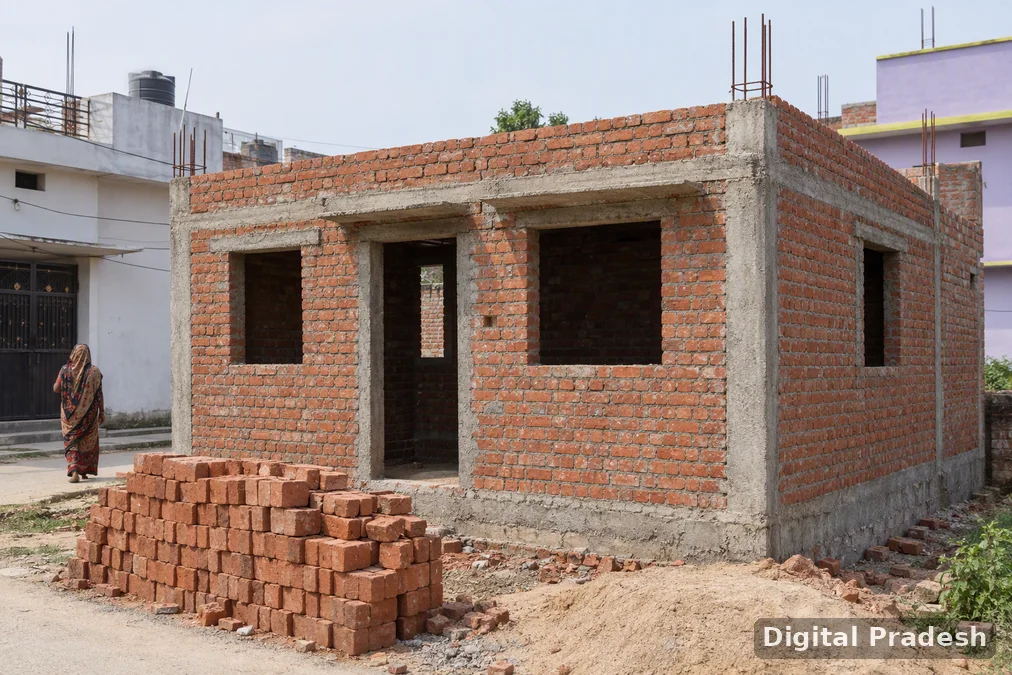
For BLC houses, the order specifies that the second instalment of 40 per cent will be released for geo-tagged houses that have reached the lintel stage, the construction level above door and window openings. Geo-tagging records a house’s location alongside evidence of its construction stage.
Bihar must ensure geo-tagging at different stages to support subsequent central instalments. The state and implementing agencies must also establish a monitoring system to track scheduled milestones, intended outcomes, reforms and other scheme conditions, according to the ministry.
The order requires all houses under the BLC component to be completed within 12 to 18 months of the CSMC sanction. That period runs from the committee’s approval, rather than automatically from the date of the funding order.
Amenities, portal records and audit requirements
The ministry directed Bihar to ensure that house specifications conform to National Building Code and Indian Standards requirements. The state government or urban local body must provide the requisite infrastructure. Basic civic amenities must be available in the areas concerned before the houses are completed.
The order requires Bihar to use PMAY-U 2.0’s Unified Web Portal instead of developing a separate management information system. Activities to be conducted through the portal include beneficiary applications and verification, geo-tagging, project creation, preparation of beneficiary lists, generation of central assistance releases and records of their utilisation.
PIB’s September background document describes the portal as a shared platform connecting beneficiaries, urban local bodies, states and implementing agencies. It supports the processing and tracking of applications, monitoring of construction stages and fund disbursement.
The ministry also directed the state to ensure that releases to implementing agencies, urban local bodies and beneficiaries do not violate the Model Code of Conduct, the rules governing conduct during elections.
For accountability after release, the sanction requires recipient institutions’ accounts to remain open to inspection by the sanctioning authority. Under Rule 236(1) of the General Financial Rules, 2017, cited in the order, those accounts are also subject to audit by the Comptroller and Auditor General of India and internal audit by the ministry’s Principal Accounts Office when called upon.

Please log in to leave a comment.


