Labour Bureau: Central VDA revised from 1 October 2026
Mint reports revised central-sphere minimum wages from 1 October 2026, including Rs 537 a day for unskilled agricultural workers in Area A; state-governed employment may follow different rates.
In this article
Listen to this article
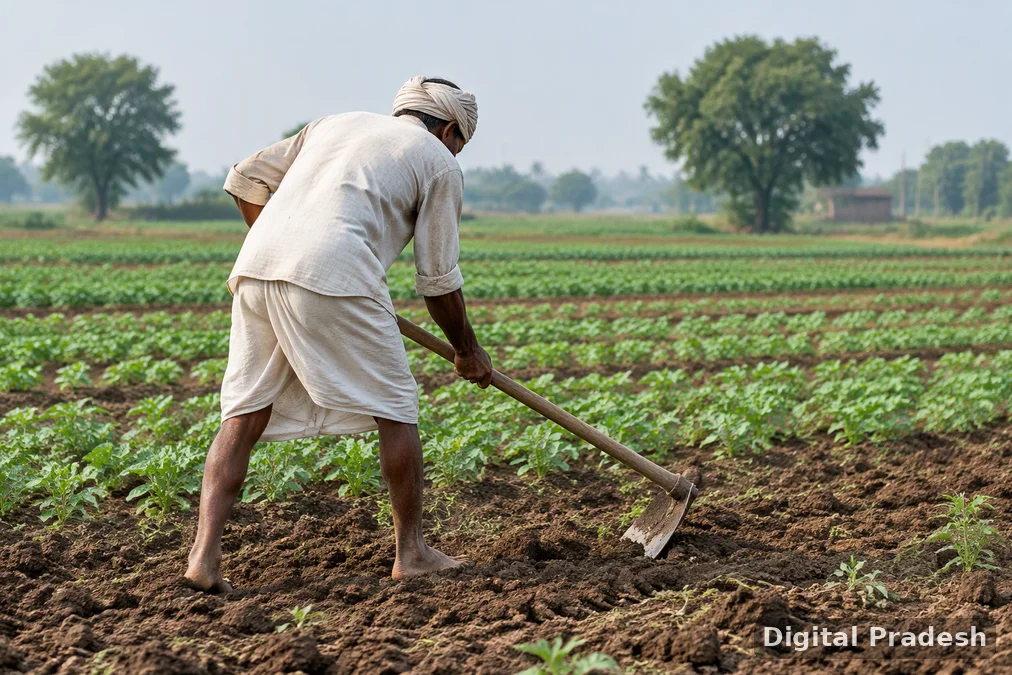
The Labour Bureau has revised Variable Dearness Allowance (VDA) for workers covered by the Centre’s minimum-wage framework from 1 October 2026, according to Mint. Its report puts the revised daily minimum wage for unskilled agricultural workers at Rs 537 in Area A, Rs 491 in Area B and Rs 486 in Area C.
The Chief Labour Commissioner (Central)’s official Minimum Wages page lists a document titled “VDA Order October 2026”, dated 30 September 2026. Mint also identifies 30 September as the date of issue and reports that the revision covers agriculture, construction and maintenance, loading and unloading, sweeping and cleaning, watch and ward duties, and certain mining activities.
The revised amounts and effective date are reported here on the basis of Mint’s account. The available official order extracts contain a geographical classification annexure, but not the operative provisions or revised wage tables.
The distinction between central and state coverage matters. Mint reports that these are central-sphere minimum wages, rather than a single minimum salary applying to every worker in India. Employment governed by state-government notifications may instead fall under the rates notified by the respective state.
Agricultural wages combine basic pay and VDA
VDA is the inflation-linked component added to the basic minimum wage, according to Mint’s explanation of the revision. The agricultural amounts are therefore total daily minimum wages, not allowances payable on top of those totals.
For unskilled agricultural workers, Mint reports a revised VDA component of Rs 204 a day in Area A, Rs 188 in Area B and Rs 186 in Area C. These components are included in the respective daily minimum wages.
For highly skilled agricultural workers, the corresponding total daily rates are Rs 705 in Area A, Rs 655 in Area B and Rs 587 in Area C, according to Mint. Its account thus identifies both skill category and workplace location as factors determining the applicable amount.
Mint reports that the revision follows an increase in the average Consumer Price Index for Industrial Workers, or CPI-IW, from 424.80 to 431.42 as of 30 June 2026. The reported increase is 6.62 index points. According to its account of the order, the revised VDA has been rounded up to the next higher rupee.
The Ministry of Labour and Employment explained the underlying process in a release dated 29 October 2021: the Labour Bureau compiles the CPI-IW, and central-sphere VDA is revised twice a year, on 1 April and 1 October. That release concerned the 2021 revision; it is historical background, not evidence for the October 2026 wage amounts.
The official Minimum Wages page separately lists “VDA Order April 2026”, dated 1 April 2026. The listing establishes that an earlier order exists, but does not itself provide the agricultural rates needed to calculate the increase between the two revisions.
Location changes the applicable daily rate
The Gazette of India annexure reproduced in the official extracts divides locations into Areas A, B and C. It lists Delhi, Noida, Ghaziabad, Kanpur and Lucknow in Area A, alongside cities including Ahmedabad, Bengaluru, Chennai, Hyderabad and Greater Mumbai.
For readers in Uttar Pradesh, the Area B list includes Agra, Aligarh, Bareilly, Gorakhpur, Jhansi, Meerut, Moradabad, Saharanpur and Varanasi. The annexure also lists Allahabad under that name.
A note to the annexure places locations not named in the lists in Area C where the Minimum Wages Act, 1948 applies. Another note explains that “UA”, used beside many entries, means urban agglomeration.
These classifications explain the location-based differences in the rates reported by Mint. They do not, by themselves, establish whether a particular agricultural establishment falls within central or state jurisdiction.
In its 2021 release, the Ministry of Labour and Employment described central-sphere coverage as including establishments under the authority of the central government, railway administration, mines, oilfields, major ports and corporations established by the central government. It also said the rates for covered employment applied equally to contract and casual workers.
Different schedules for construction and security work
The October revision reported by Mint does not assign the same wage to every occupation within an area. For an unskilled construction worker in Area A, it gives a basic daily wage of Rs 523 and VDA of Rs 317, making a total minimum wage of Rs 840.
For a highly skilled construction worker in the same area, Mint reports basic pay of Rs 693 and VDA of Rs 418, bringing the daily total to Rs 1,111. Its account says the construction category includes roads, runways and buildings, as well as underground communication cables, water-supply lines and sewerage pipelines.
Watch and ward duties have separate rates. According to Mint, workers performing those duties without arms have daily minimum wages of Rs 1,024 in Area A, Rs 933 in Area B and Rs 794 in Area C. For duties with arms, the corresponding amounts are Rs 1,111, Rs 1,024 and Rs 933.
Mint also reports coverage for loading and unloading at railway goods sheds, warehouses, docks, ports and airports, along with sweeping and cleaning work. The applicable schedule therefore depends on the employment category as well as the worker’s skill classification and location.

Please log in to leave a comment.


