54th PRAGATI meeting: Modi seeks faster project execution
Modi urged faster work on railway stations, PM Ekta Malls and bulk drug parks, alongside monthly welfare reviews. The projects reviewed cost over Rs 16,000 crore; this was not a new funding allocation.
In this article
Listen to this article
Prime Minister Narendra Modi reviewed infrastructure projects costing more than Rs 16,000 crore across 31 states and Union Territories at the 54th PRAGATI meeting at Seva Teerth, according to the Prime Minister’s official website. The review covered railway infrastructure, PM Ekta Malls and bulk drug parks, with directions to accelerate execution and resolve coordination problems between government agencies.
The official account said Modi called for faster redevelopment of major railway stations, closer monitoring of mall construction and greater emphasis on domestic production of pharmaceutical ingredients. He also asked state Chief Secretaries to review welfare schemes with District Magistrates every month to identify implementation gaps and ensure timely delivery to eligible beneficiaries.
The Rs 16,000 crore figure represents the combined cost of projects reviewed at the meeting, rather than a newly announced funding allocation. The official account does not provide a project-by-project cost breakdown or revised completion dates.
Railway stations to connect with other transport networks
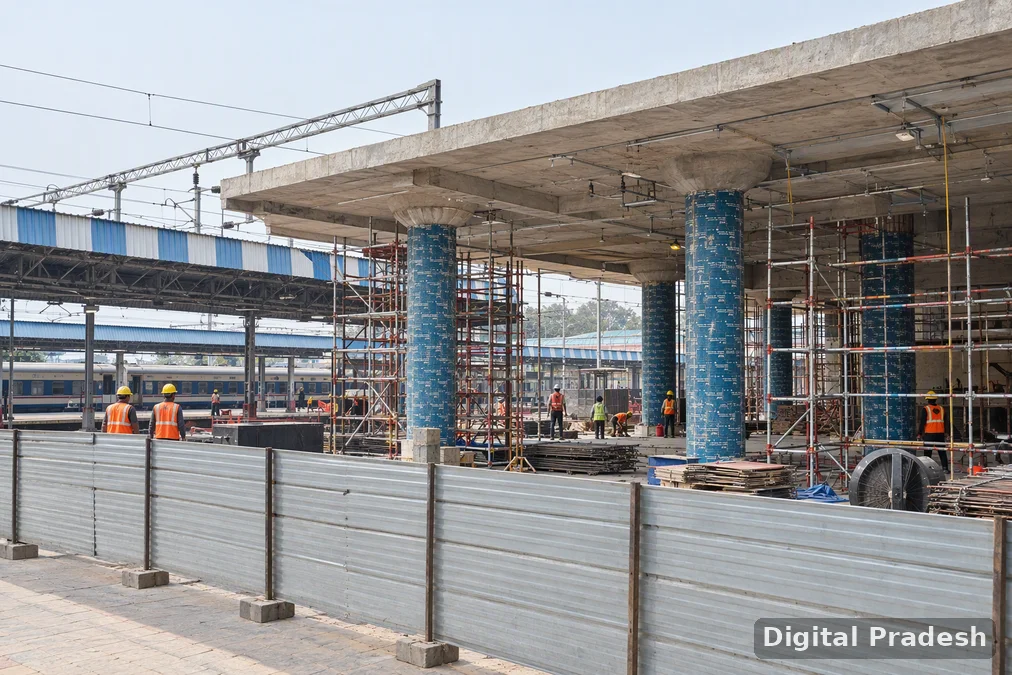
During the review of Ahmedabad railway station’s redevelopment, Modi asked officials to expedite the redevelopment of major stations across the country, the Prime Minister’s official website said. He linked the direction to passenger convenience and ease of travel.
Redeveloped stations should function as multimodal transport hubs, he said, with connections to metro services and other transport networks. In practical terms, the proposal is for stations to connect different forms of transport, rather than operate only as places to board or leave a train.
The official account records the direction to speed up work but does not specify Ahmedabad station’s construction progress or identify the particular bottlenecks discussed. It also does not announce a completion deadline for the station.
Across the projects under review, Modi asked Union ministries and state governments to strengthen coordination and monitor implementation at the senior-most level. According to the official account, he called for officials to anticipate execution challenges, take decisions in time and assign clear responsibility for completing projects on schedule.
Ekta Malls and drug parks get separate priorities
For PM Ekta Malls, Modi emphasised their role in providing markets for local products and supporting artisans’ livelihoods and businesses, the Prime Minister’s official website said. He asked Chief Secretaries to review progress regularly and ensure timely completion.
The direction went beyond construction. Modi called for the malls to be linked with tourism and local businesses, saying stronger demand could generate employment in rural production, packaging, storage and transportation. These were potential benefits identified at the meeting; the account does not give employment estimates or sales targets.
The pharmaceutical review covered bulk drug parks in Andhra Pradesh, Gujarat and Himachal Pradesh. According to the official account, Modi called for priority to be given to domestic production of active pharmaceutical ingredients and essential inputs to strengthen self-reliance.
Active pharmaceutical ingredients are the components of medicines that produce their intended therapeutic effect. The account does not specify production capacities, individual park costs or operational milestones, limiting the detail available on how the direction will translate into additional domestic supply.
Monthly district reviews to focus on delivery
Modi’s instruction for monthly discussions between Chief Secretaries and District Magistrates placed welfare delivery alongside infrastructure execution in the review. The Prime Minister’s official website said the purpose was to address gaps and ensure benefits reached eligible people on time.
He asked officials to focus on outcomes rather than outlays: the improvements achieved through public spending, not simply the amount allocated or spent. Referring to the Aspirational Districts and Aspirational Blocks Programmes, he highlighted coordination between programmes, regular monitoring and local accountability in underserved areas.
The official account records these as governance directions. It does not set out a new reporting format or measurable targets for the monthly district-level reviews.
How PRAGATI reviews are followed up
PRAGATI stands for Pro-Active Governance and Timely Implementation. A Press Information Bureau backgrounder dated 13 January 2026 describes it as a platform launched in 2015 to review projects, schemes and public grievances through direct engagement between the Prime Minister, Union ministries and states.
According to the Press Information Bureau, the system combines digital data management, video conferencing and geospatial technology, which presents location-based information. This allows officials to discuss implementation problems using project information and visual evidence from sites.
The backgrounder distinguishes the review meeting from the follow-up process. Routine issues are handled at ministry level, while complex or critical problems can be escalated to PRAGATI. After meetings, the Cabinet Secretariat monitors projects; ministries review schemes and grievances under continuing oversight of the Prime Minister’s Office.
In its January assessment, the Press Information Bureau said 382 major national projects had been reviewed and monitored under PRAGATI. It reported that 2,958 of 3,187 identified issues had been resolved. Those figures describe the government’s assessment at that point, not an updated total following the 54th meeting.
For the projects considered at the 54th review, the published directions establish responsibility for closer monitoring and faster decisions. The official account leaves the project-level schedules, outstanding obstacles and subsequent resolution of those obstacles unspecified.

Please log in to leave a comment.


