Narendra Modi: Meets BRICS MPs, forum outlines priorities
Modi met BRICS MPs in New Delhi on 26 October. Separately, the forum's declaration outlined parliamentary priorities on AI, climate finance and institutional reform, with digital infrastructure proposals still under consideration.
In this article
Listen to this article
Prime Minister Narendra Modi met MPs from BRICS nations in New Delhi on 26 October 2026 during the 12th BRICS Parliamentary Forum, according to DD News. The Prime Minister’s Office said the interaction covered a wide range of issues, while the forum’s Joint Declaration set out parliamentary priorities spanning artificial intelligence, digital public infrastructure, climate finance and reform of international institutions.
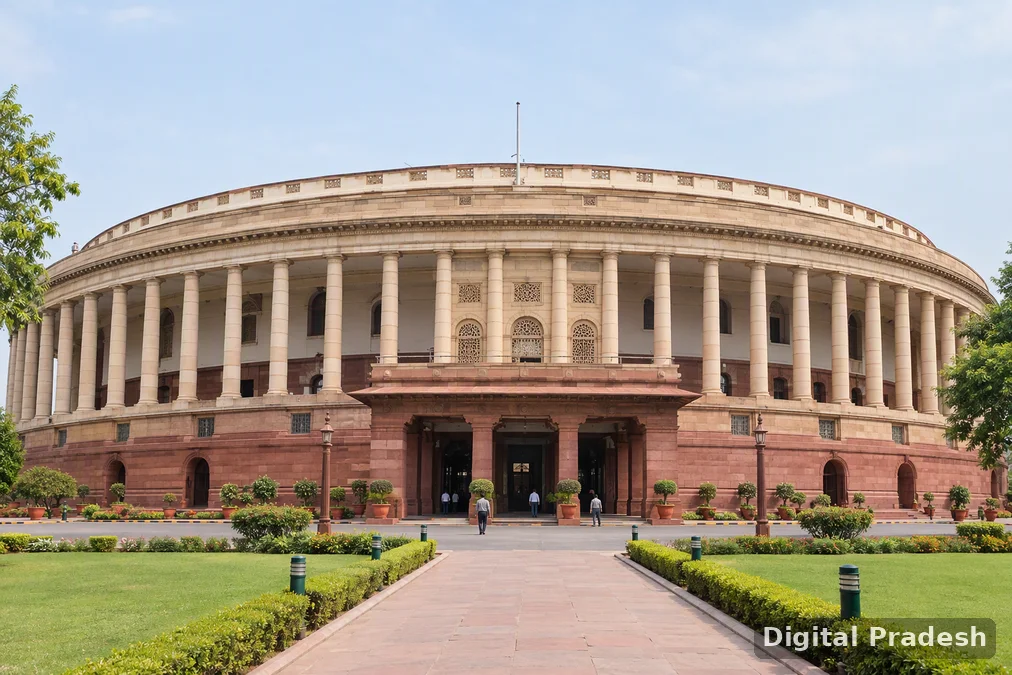
The meeting took place during the two-day forum held on 26-27 October, dates recorded in the Joint Declaration. DD News reported that Lok Sabha Speaker Om Birla inaugurated the gathering at Samvidhan Sadan in the Parliament House Complex and urged member and partner countries to turn shared commitments into outcomes that improve citizens’ lives.
“Had a wonderful interaction with MPs from BRICS nations during the 12th BRICS Parliamentary Forum 2026 being held in Delhi. We exchanged perspectives on a wide range of issues,” Modi said in a statement reproduced by the Prime Minister’s Office.
The office’s account did not identify those issues or announce a specific agreement from Modi’s interaction. The wider commitments appear in the parliamentary forum’s declaration and should be distinguished from the brief account of his meeting.
Parliamentary cooperation within national mandates
The Joint Declaration identifies the forum’s theme as “Fostering Parliaments for People-Centric Development”. It records the participation of presiding officers and parliamentary representatives from Brazil, China, Egypt, Ethiopia, India, Indonesia, Iran, Russia, South Africa and the United Arab Emirates, and separately welcomes the participation of partner countries.
The representatives pledged legislative support for the BRICS partnership across political and security cooperation, economic and financial cooperation, and cultural and people-to-people exchanges. The declaration qualifies that support: each parliament would act within its own constitutional mandate and powers.
That distinction defines the commitments recorded in the document. It calls for cooperation among national legislatures, including exchanges of experience and parliamentary dialogue, rather than announcing a common law for participating countries.
In its advance report, Akashvani said the programme would include four high-level sessions on resilience, innovation, cooperation and sustainability. It also announced a dedicated meeting of parliamentary international affairs committee chairs to discuss parliamentary diplomacy, capacity-building and sharing successful practices.
The declaration places the parliamentary gathering within India’s BRICS chairship in 2026. It welcomes the New Delhi Leaders Declaration from the BRICS summit held on 12-13 September 2026 and expresses support for the remainder of India’s chairship. The September leaders’ meeting and October parliamentary forum are separate events.
AI for legislative work, with privacy safeguards
The declaration identifies practical uses for artificial intelligence in parliaments: research, analysis, public outreach, interaction with citizens and the collection of feedback. It encourages BRICS legislatures to exchange successful examples of digital technologies and AI-enabled tools.
These are proposed areas of cooperation, not a report that every participating parliament has deployed such systems. The representatives’ stated objective is to help legislatures innovate and benefit more equitably from technological advances.
Beyond parliamentary work, the declaration calls for international cooperation to widen access to AI resources, knowledge, training and opportunities, subject to national priorities and applicable laws. It also identifies energy efficiency, scientific innovation and the mitigation of potential risks as priorities for AI development.
The representatives link these ambitions to digital sovereignty, describing the protection of data privacy and personal information, alongside resilient national technology systems, as necessary elements. Their position combines support for cross-border technological cooperation with respect for each country’s sovereignty and national security.
The declaration also advocates universal and meaningful connectivity and collaborative development of digital infrastructure to support economic activity, social inclusion and public services.
Climate finance and development commitments
On climate policy, the parliamentary representatives call for stronger efforts to implement nationally determined contributions, the national climate commitments referred to in the declaration. They also seek stronger measures to reduce climate change and adapt to its effects under the United Nations climate framework and the Paris Agreement, as applicable.
The declaration says those efforts should reflect equity, differing national circumstances and countries’ different responsibilities and capabilities. It calls on developed countries to provide developing countries with additional, adequate, predictable and accessible finance, as well as capacity-building and technology support for adaptation on mutually agreed terms.
These passages express the forum’s policy position; they do not announce a quantified climate-finance package.
The representatives also reaffirm support for the United Nations’ 2030 Agenda for Sustainable Development, aligned with national policies and regulations. They identify poverty eradication as a prerequisite for sustainable development and seek BRICS cooperation in shaping the global development agenda beyond 2030.
Institutional reform and proposals still under consideration
The declaration calls for comprehensive reform of the United Nations, including its Security Council, to make international institutions more representative and responsive to contemporary needs. It also presents parliamentary dialogue as a means of strengthening the participation of developing countries in global governance.
For cooperation within the Inter-Parliamentary Union, the international parliamentary forum, the representatives take note of Russia’s initiative to consider a BRICS Plus geopolitical group. The wording records an idea for consideration, not the establishment of that group.
A similar distinction applies to the digital agenda. The Joint Declaration notes a proposal for a BRICS digital public infrastructure repository and pilot projects for digital transformation. It records those initiatives as proposals, rather than announcing that the repository or pilot projects have been launched.

Please log in to leave a comment.


