Lakshadweep Tourism Trade: Regulation published, start pending
The new regulation covers tourism business registration, safety and consumer protection in Lakshadweep, but commencement awaits notification by the Administrator.
In this article
Listen to this article
The Ministry of Law and Justice published the Lakshadweep Tourism Trade (Registration, Safety and Facilitation) Regulation, 2026 in the Gazette of India on 27 October 2026, setting out a registration framework for tourism businesses across the Union territory. The regulation covers accommodation, tour operators, guides, adventure activities and other tourism services, but its commencement depends on dates to be notified by the Lakshadweep Administrator.
Published as Regulation No. 17 of 2026, the measure was promulgated by the President under Article 240 of the Constitution, the constitutional power cited for making it. Its stated purposes include tourist safety, service quality, transparent charges and responsible use of fragile island and marine ecosystems.
Section 1 allows the Administrator to bring different provisions into force on different dates. Gazette publication therefore does not itself start the six-month registration window provided for existing businesses: that period runs from commencement of the relevant provisions.
Registration tied to the service and location
Section 6 of the regulation requires anyone carrying on tourism trade in Lakshadweep to be registered or exempted. Its definition of tourism service providers extends beyond hotels and resorts to homestays, travel agents, guides, diving centres, scuba professionals, tourism vessel operators, beach amenity operators and wellness tourism providers.
The accommodation definition also includes tented accommodation, houseboats and live-aboard lodging offered to tourists for payment. Beach amenities include temporary shacks, kiosks, deck-beds, umbrellas and chairs used for tourism on beaches or foreshore areas.
Under Section 6, a business offering more than one category of tourism service may receive a single certificate with separate category endorsements. These endorsements identify the activities covered by the registration. The regulation says separate registration is not required for the same person and establishment unless a separate endorsement is needed for safety, consumer protection, environmental or public-interest reasons.
The certificate is not an unrestricted permission to operate. Section 6 prohibits a registered provider from working outside the category, area, island, vessel, premises or activity endorsed in it.
Existing providers must apply for registration or endorsement within six months of the relevant provisions commencing, unless a longer period is notified. A provider applying within that period will not be treated as a defaulter while the application remains pending, subject to the safety restrictions applicable to high-risk activities.
Section 7 leaves the application form, manner of submission and fee to rules made under the regulation. It requires the designated authority to communicate application defects within fifteen working days of receipt. If it does not, the application is treated as complete for calculating the period allowed for its disposal, rather than automatically approved.
Section 8 specifies disposal periods of forty-five days for complete applications in low-risk categories and sixty days for high-risk categories.
Safety and consumer protection within the framework
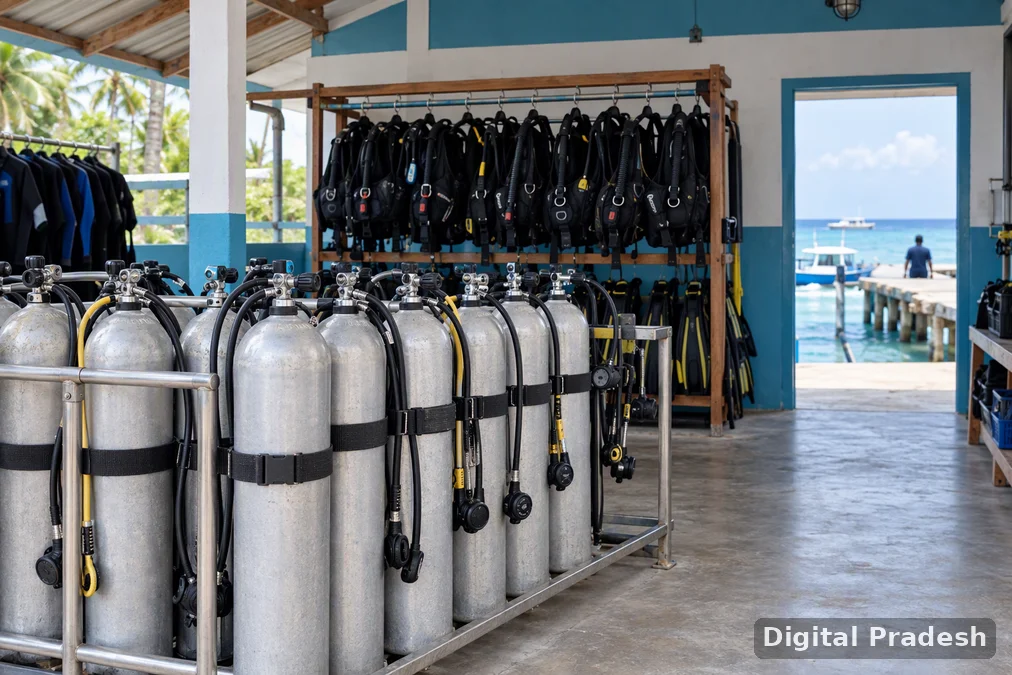
The regulation distinguishes between higher- and lower-risk tourism activities. Its high-risk definition includes scuba diving, jet ski rides, parasailing, high-speed boat rides and deep-sea activities. The low-risk category includes kayaking, canoeing, glass-bottom boat rides and snorkelling, among other activities.
Section 3 also defines tourism malpractice broadly. It includes overcharging, misleading advertisements, failure to disclose material terms, failure to issue bills or receipts, and failure to provide promised facilities. Unsafe equipment, untrained personnel, coercive selling and unauthorised underwater activities are included.
The definition addresses restrictions on tourists’ choices as well. Obstructing a tourist’s free choice of accommodation, travel, shopping or activity falls within malpractice. The regulation describes touting as coercing, soliciting or pestering tourists for tourism-related services for personal benefit.
Section 2 gives the Administrator power to exempt classes of premises, people or activities through a notification, subject to specified conditions. Potential exemptions include government facilities not operated for commercial tourism, charitable or religious accommodation at nominal charges, occasional non-commercial community services, and micro or seasonal activities where full registration is unnecessary.
Those exemptions do not remove the underlying safeguards. Section 2 expressly preserves obligations concerning tourist safety, cleanliness, environmental protection, emergency reporting, consumer transparency and compliance with other laws.
A register and digital processing system
Section 4 provides for a Tourism Trade Register containing registered providers’ details, category endorsements, validity, suspensions, cancellations and blacklisting. The designated authority must maintain it, preferably online, with access arranged in the manner prescribed by rules.
The same section requires the Administration to integrate applications, renewals, payments, certificates, inspection reports and public verification through a single-window or digital system. This is a requirement in the regulation, not an announcement that such an integrated system is already operational.
The Administrator may notify designated authorities for functions including registration, inspection, adjudication, appeals and safety audits. The regulation defines a designated authority as one not below the level of Director, Tourism, and allows different authorities for different areas or classes of tourism trade.
Section 5 separately permits the Administrator to constitute a Tourism Trade Facilitation and Safety Committee. Its role would be advisory, covering standards, safety protocols, capacity management, grievance trends, sustainable tourism and ease of doing business. Possible members include representatives from tourism, police, shipping, health, environmental bodies, emergency services and industry experts.
Registration does not replace entry or environmental permissions
Section 2 states that the regulation does not authorise tourism in places where an activity is prohibited or restricted under another law, notification, clearance, security instruction, permit system or local restriction. It specifically preserves restrictions under coastal, environmental, forest, wildlife and maritime frameworks.
Visitor entry permissions are a separate requirement. The Lakshadweep Administration’s e-Permit portal states that people who are not native to the islands need a permit to enter and reside there under the Laccadive, Minicoy and Amindivi Islands (Restriction on Entry and Residence) Rules, 1967. The portal identifies exemptions for government officials and armed forces members working in or visiting the islands, and their families.
The emphasis on regulation and environmental safeguards has an earlier policy context. In a notice dated 22 May 2020, the Lakshadweep Department of Tourism invited comments on its draft Lakshadweep Tourism Policy-2020. That draft envisaged the Administration gradually moving from providing tourism services towards facilitating and regulating them, while promoting community participation and environmentally sustainable tourism. The consultation document records those proposals, not their subsequent implementation.
For the new regulation, Section 2 permits implementation to be tailored geographically and by activity: the Administrator may notify phased application to particular islands, tourist areas, categories of service providers or tourism activities.

Please log in to leave a comment.


