Supreme Court: Collegium recommends four High Court chiefs
The Supreme Court Collegium recommended four judges to head the Delhi, Gujarat, Telangana and Uttarakhand High Courts, LiveLaw reported; the recommendations are not completed appointments.
In this article
Listen to this article
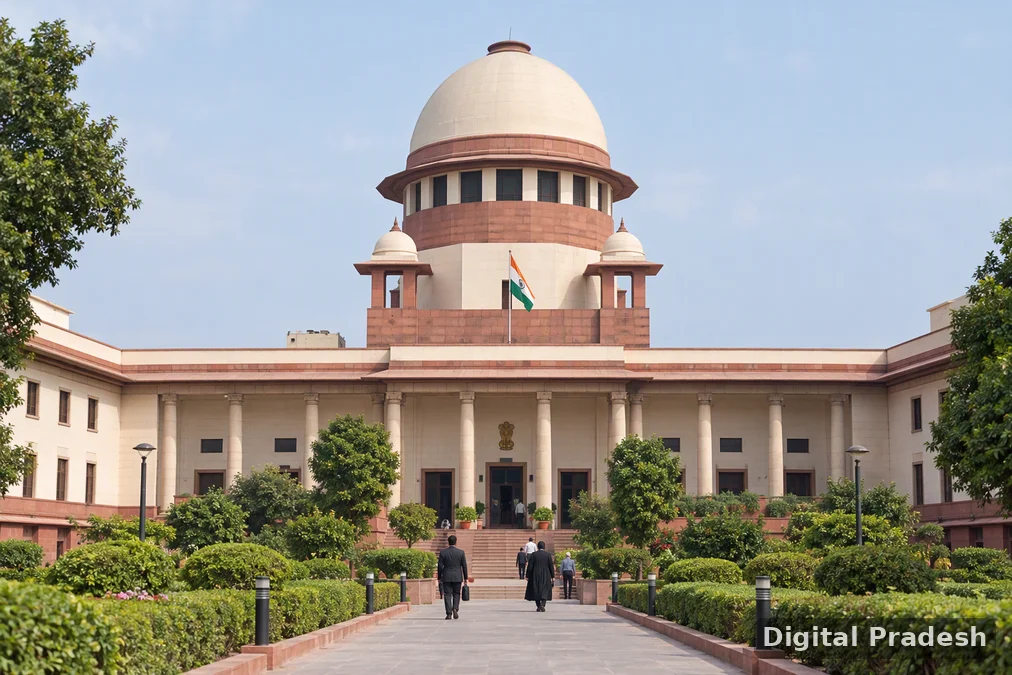
The Supreme Court of India has listed a Collegium statement dated 26 October 2026 concerning the appointment of Chief Justices in four High Courts. LiveLaw reported that the Collegium recommended Justice P Sam Koshy for Delhi, Justice Manash Ranjan Pathak for Gujarat, Justice Tapabrata Chakraborty for Telangana and Justice Sudhir Singh for Uttarakhand.
The development concerns recommendations, not confirmation that the four judges have taken charge. The Supreme Court’s Collegium Resolutions page establishes the statement’s date and subject; the names and proposed postings are reported by LiveLaw, which said the recommendations followed the Collegium’s meeting on 26 October.
The full statement’s text is not available in the material reviewed for this report. The listing does not identify the judges or explain the selections, while LiveLaw’s report provides the proposed appointments but not the Collegium’s reasoning.
The four recommended appointments
According to LiveLaw, Justice Koshy, serving at the Telangana High Court, has been recommended to head the Delhi High Court. The Telangana High Court’s judicial profile records that he assumed charge as its Acting Chief Justice on 6 October 2026.
The profile traces his judicial career to his appointment as an Additional Judge of the Chhattisgarh High Court on 16 September 2013. He became a permanent judge on 8 March 2016 and, following his transfer, took oath as a judge of the Telangana High Court on 27 July 2023.
Before joining the Bench, Justice Koshy practised in civil, constitutional, service and labour matters, according to the Telangana High Court. His practice began in the Madhya Pradesh High Court at Jabalpur and later moved to the Chhattisgarh High Court at Bilaspur. The profile also records his service as a government advocate and Deputy Advocate General in Chhattisgarh.
Justice Pathak has been recommended as Chief Justice of the Gujarat High Court, where he is already serving, LiveLaw reported. The Gujarat High Court’s profile records that he assumed charge there on 14 September 2026, following a period at the Orissa High Court.
According to that profile, Justice Pathak became an Additional Judge of the Gauhati High Court on 22 May 2013 and a permanent judge on 12 November 2018. He served at the Orissa High Court from 21 July 2025 to 13 September 2026 before moving to Gujarat.
The Gujarat High Court describes his earlier legal practice as principally involving civil, constitutional, land acquisition and service matters. It also records his work as standing counsel for the Assam government’s Education Department and for the Gauhati High Court before his appointment as a judge.
For Telangana, the Collegium recommended Justice Chakraborty, currently serving at the Calcutta High Court, according to LiveLaw. For Uttarakhand, it recommended Justice Singh of the Patna High Court.
Of the four proposed appointments described by LiveLaw, Justice Pathak’s would place him at the head of the court where he already serves. The other three recommendations concern leadership positions in different High Courts from their reported present postings.
Recommendation and formal appointment are separate stages
The distinction between a Collegium recommendation and a completed appointment matters when reading the announcement. The Supreme Court’s explanatory document, Appointment of Judges of the High Courts, describes a process in which the Collegium sends recommendations to the Union Minister of Law and Justice, followed by action involving the Union government and the President.
The document explains that the government may return a proposal to the Collegium for reconsideration. It states that, under the Memorandum of Procedure – the procedural framework for judicial appointments – a recommendation reiterated by the Collegium is to be accepted by the government.
The document then describes the Law Minister placing the proposal before the Prime Minister, who advises the President. Following presidential approval, the Department of Justice issues a gazette notification, the formal published instrument recording the appointment.
That explanatory document principally addresses the appointment of advocates and judicial officers as High Court judges. Its candidate-assessment criteria should not be read as the stated reasons for these four Chief Justice recommendations: neither the court’s listing nor LiveLaw’s account supplies those reasons.
A separate report by SCC Times illustrates the distinction in an earlier round of Chief Justice appointments. It reported that the Department of Justice issued notifications on 5 September 2026 appointing Chief Justices to eight High Courts, following Collegium recommendations.
Among those appointments, SCC Times reported that Justice Mahesh Chandra Tripathi was appointed Chief Justice of the Bombay High Court after a recommendation dated 6 August 2026. It also reported the appointment of Justice Alpesh Yeshvant Kogje as Chief Justice of the Madhya Pradesh High Court following a recommendation dated 31 August 2026. Those were separate appointments, not implementation of the October statement.
For the four recommendations now reported, neither the Supreme Court’s listing nor LiveLaw’s account specifies when the judges would assume office in their proposed posts.

Please log in to leave a comment.


