Khelo India: Cabinet approves sports goods manufacturing scheme
The Union Cabinet approved Rs 1,856.67 crore for sports goods manufacturing support from 2026-27 to 2033-34, covering investment, production, certification, research and skills.
In this article
Listen to this article
The Union Cabinet approved the Khelo India Sports Goods Manufacturing Scheme on 28 October 2026, with an outlay of Rs 1,856.67 crore for the financial years 2026-27 to 2033-34, according to the Press Information Bureau (PIB). The scheme combines investment and production incentives with support for manufacturing clusters, international certification, research, skills and exports.
A combined Rs 1,130 crore will fund anchor investment and turnover-linked support, while Rs 105 crore will help manufacturers obtain and renew international sports federation certifications, PIB’s explainer dated 28 October states. The Cabinet announcement published by the Prime Minister’s Office says the scheme aims to attract investment, expand domestic manufacturing and reduce import dependence.
The approval follows Finance Minister Nirmala Sitharaman’s proposal in her Budget speech on 1 February 2026 for a dedicated sports goods initiative covering manufacturing, equipment design and material sciences. The Cabinet decision now sets out the funding period and support components for that initiative.
Investment support has two different thresholds
According to PIB, Anchor Investment Support will provide capital expenditure support of 20 per cent to anchor investors investing at least Rs 100 crore. Capital expenditure means spending on assets used to establish or expand manufacturing facilities.
The Cabinet announcement says this component is intended to bring leading domestic and global manufacturers, brands and retail chains into designated Sports Goods Manufacturing Zones. These larger investors are also expected to support networks of suppliers and ancillary enterprises, which provide inputs and related services.
The separate Turnover Linked Support component will offer incentives of up to 15 per cent to manufacturers investing Rs 10 crore or more, PIB states. The Cabinet announcement describes its purpose as encouraging higher production, capacity expansion and sustained manufacturing growth.
These are distinct forms of assistance: the anchor component supports investment in manufacturing capacity, while turnover-linked assistance is intended to encourage production. PIB’s explainer does not specify the detailed calculation base for the turnover incentive or how the combined Rs 1,130 crore will be divided between the two components.
New zones alongside support for Meerut and Jalandhar’s manufacturing base
The proposed Sports Goods Manufacturing Zones will bring manufacturers, suppliers, testing facilities, design and prototyping centres, and supporting enterprises into the same industrial locations, according to the Cabinet announcement. Prototyping facilities allow products to be developed and tested before full-scale production.
PIB says there may be four integrated zones, each covering more than 300 acres. That wording leaves the number provisional; neither the Cabinet announcement nor PIB’s explainer identifies their locations.
The zones will draw on existing infrastructure under the Bharat Audyogik Vikas Yojna, known as BHAVYA, and industrial parks associated with the National Industrial Corridor Development Corporation. PIB describes this infrastructure as including factory facilities, testing laboratories, warehousing and connections to utilities and transport.
The scheme also provides a separate route for upgrading existing sports goods clusters. According to PIB, common facilities and shared infrastructure will be improved through cost-sharing with states to support smaller enterprises.
That component is relevant to an industry with a substantial small-business base. PIB says small and micro enterprises account for nearly 90 per cent of sports goods production. It identifies Meerut in Uttar Pradesh and Jalandhar in Punjab as established manufacturing centres.
Together, those two clusters comprise more than 250 exporting units, over 1,000 units serving the domestic market, more than 4,000 micro enterprises and nearly 20,000 household units, according to PIB. These figures describe the existing manufacturing network, not the number of businesses selected to receive scheme assistance.
Certification support covers first approvals and renewals
The Rs 105 crore certification component will cover 70 per cent of first-time certification costs and 50 per cent of renewal costs, PIB states. Assistance will be available for certifications from International Sports Federations.
The Cabinet announcement links this support to internationally accepted quality and performance standards and access to overseas markets. Certification is therefore a separate intervention from expanding factory capacity: it addresses whether products meet the standards required in their intended sporting markets.
NITI Aayog’s March 2026 report, Realising the Export Potential of India’s Sports Equipment Manufacturing Sector, provides context for that emphasis. The report describes an industry with established manufacturing skills but a fragmented structure that has not fully moved towards large-scale, technology-enabled production.
In a message published in the report, Ashish Dhawan of the Foundation for Economic Development identified gaps in testing infrastructure, certification pathways, product validation and coordination between manufacturers and sporting institutions. He argued that global competitiveness depends on quality and brand reputation as well as price.
Research grants and training extend beyond factory incentives
The scheme will support Centres of Excellence in educational and research institutions, with work covering sports equipment, material sciences, protective gear and advanced manufacturing technologies, the Cabinet announcement says. It also envisages research collaboration through the Anusandhan National Research Foundation.
According to PIB, sports start-ups registered with the Department for Promotion of Industry and Internal Trade will be eligible for grants of up to Rs 20 lakh. The Cabinet announcement says start-up support will cover the development, testing, validation and commercialisation of new products, processes and technologies.
Training will be organised in collaboration with the Ministry of Skill Development and Entrepreneurship and industry stakeholders, according to the Cabinet announcement. The stated aim is to align workers’ skills with manufacturers’ requirements as production methods evolve.
Export promotion without a guaranteed export outcome
PIB lists an India Sports Expo and a Brand India campaign among the proposed market-development measures. The scheme will also draw on the Export Promotion Mission for branding, outreach and access to international buyers.
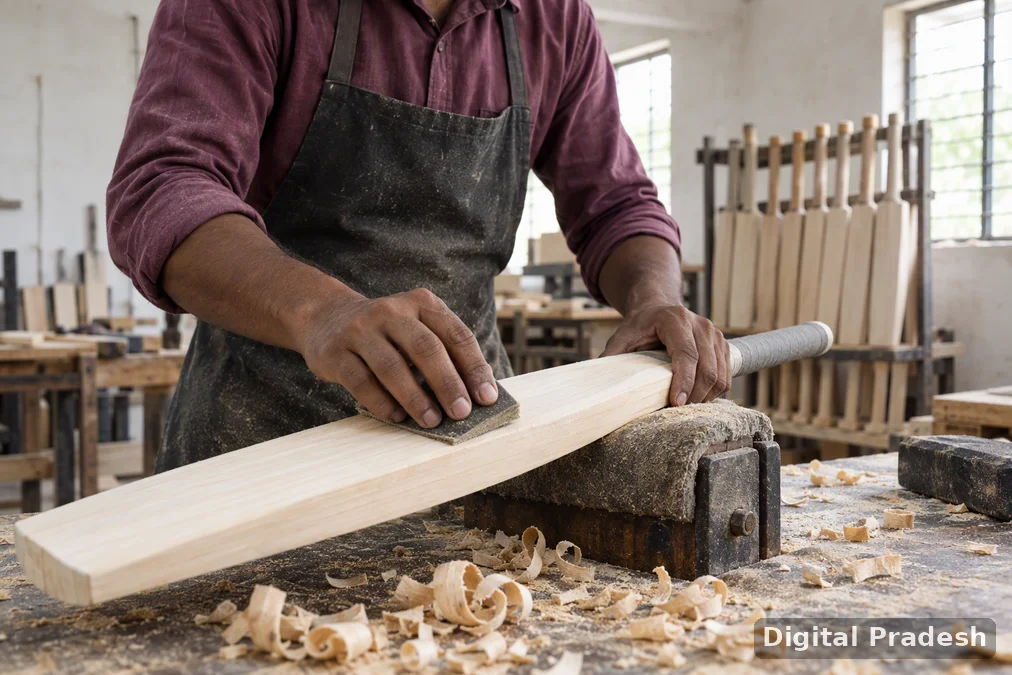
PIB says the United Kingdom, United States and Australia together receive more than half of India’s sports equipment exports. It identifies cricket bats, protective gear, inflatable balls, and gym and athletic training equipment among India’s manufactured products.
The government’s expectations of additional investment, employment and exports remain anticipated outcomes, rather than results of the newly approved scheme. For manufacturers assessing the announced support, the Cabinet announcement and PIB explainer do not specify application opening dates, claim procedures or the locations of the proposed manufacturing zones.

Please log in to leave a comment.


