Pune Metro: Modi inaugurates line, lays foundation stones
Modi inaugurated the Hinjawadi-Shivajinagar corridor and laid foundation stones for Pune Metro expansion. The combined projects are worth around Rs 21,800 crore; passenger service dates were not announced.
In this article
Listen to this article
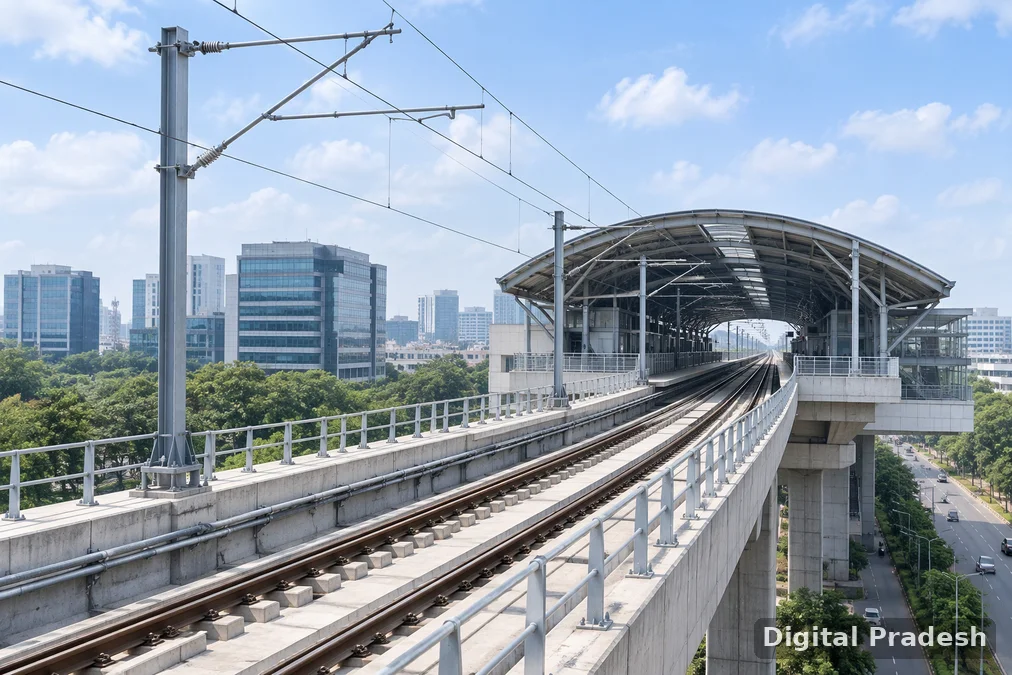
Prime Minister Narendra Modi inaugurated and laid foundation stones for Pune Metro projects worth around Rs 21,800 crore through video conferencing on Tuesday, DD News reported. A statement published on the Prime Minister’s website identified the Hinjawadi-Shivajinagar corridor as the inaugurated line and said the new expansion would connect older and newer parts of Pune.
The announcement combines an inauguration with foundation-stone laying. The Rs 21,800 crore figure therefore covers the projects announced together, rather than just the completed Hinjawadi-Shivajinagar corridor. The Prime Minister’s statement does not provide a project-by-project breakdown of that amount.
Modi said the Hinjawadi-Shivajinagar line would improve connectivity to a major information technology hub. He presented the expansion as an investment in commuting convenience and the city’s economic activity, according to the statement.
The announcement does not specify when regular passenger services on the inaugurated corridor would begin, or give fares, operating hours and train frequencies. Those details remain distinct from the ceremonial inauguration.
Hinjawadi-Shivajinagar link and the construction record
In his address, Modi linked the corridor to Pune’s role in information technology, automobiles, pharmaceuticals, startups, innovation and manufacturing. He said stronger metro connectivity would support the city’s development and the aspirations of its young population, according to the Prime Minister’s website.
His explanation centred on time: metro travel could make daily journeys more convenient, while time saved in commuting could improve urban productivity. Modi said modern cities were increasingly assessed by their competitiveness and ease of living, not only by their traditional industries or products.
These were the Prime Minister’s stated expectations for the network. The announcement does not quantify journey-time savings for the Hinjawadi-Shivajinagar corridor or provide a corridor-specific passenger forecast.
Modi also highlighted the public-private partnership used to build the inaugurated line. He described it as a combined effort by government and the private sector, according to the statement. The partnership model concerns how the project was delivered; the announcement does not set out the partners’ respective operating responsibilities or contractual obligations.
A separate project-page extract from the Pune Metropolitan Region Development Authority, or PMRDA, records an earlier construction snapshot for the Maan Hinjawadi Shivajinagar Metro Line, identified as Pune Metro Line 3. PMRDA reported physical progress of 94.58 per cent and financial progress of 97.40 per cent at the end of January 2026.
Those figures describe progress at that reporting point, not the position at inauguration. The PMRDA extract does not explain how its financial-progress measure was calculated, so it cannot be read as a statement of the project’s final expenditure.
Maharashtra expansion in the national network
Modi placed the Pune projects within a wider expansion of urban rail. According to the Prime Minister’s website, he said India’s metro network had grown over the preceding 12 years to nearly 1,200 km across 26 cities, serving more than one crore commuters daily.
He also said the Indian metro network ranked among the world’s three largest. These national figures were presented in his speech; they were not passenger or route-length figures for Pune.
For Maharashtra, Modi contrasted around 10-11 km of operational metro lines in 2014 with nearly 175 km in service at the time of his address. He said more than 680 km was under construction, involving investment exceeding Rs 2.5 lakh crore, according to the statement.
The distinction between operating and under-construction lines matters: the larger construction figure does not describe a network already available to passengers. Likewise, the investment amount Modi cited applied to Maharashtra’s wider metro construction, rather than only the Pune projects inaugurated or initiated at this event.
Modi said that spending supported employment for labourers and engineers and generated business for shops and factories. The statement presents this as his account of the economic effects of infrastructure investment; it does not provide a separate employment estimate for the Pune package.
Urban funding beyond the Pune projects
The Prime Minister also called for hundreds of smaller cities to become centres of economic growth. According to his website, he said urban development would receive greater attention alongside investment in rural roads, highways, expressways, railways, tunnels and bridges.
As part of that argument, Modi referred to the Urban Challenge Fund, which he said had been approved in February with Rs 1 lakh crore in Central assistance. He said the fund aimed to mobilise wider urban investment and urged local bodies and private-sector partners to participate.
The statement does not identify an allocation from that fund for the Pune Metro projects. It presents the fund as part of the government’s broader urban-development approach, not as a specified component of the Rs 21,800 crore announcement.
For the new Pune expansion, the announcement establishes the foundation-stone laying and Modi’s stated aim of connecting older and newer parts of the city. It does not give the expansion’s route length, station list or completion deadline.

Please log in to leave a comment.