Rail Jan Samvaad: Nationwide programme set for 22 October 2026
Indian Railways has scheduled nationwide passenger interactions for 22 October. Central Railway plans to classify feedback into short-, mid- and long-term matters, but has not specified fixed resolution deadlines.
In this article
Listen to this article
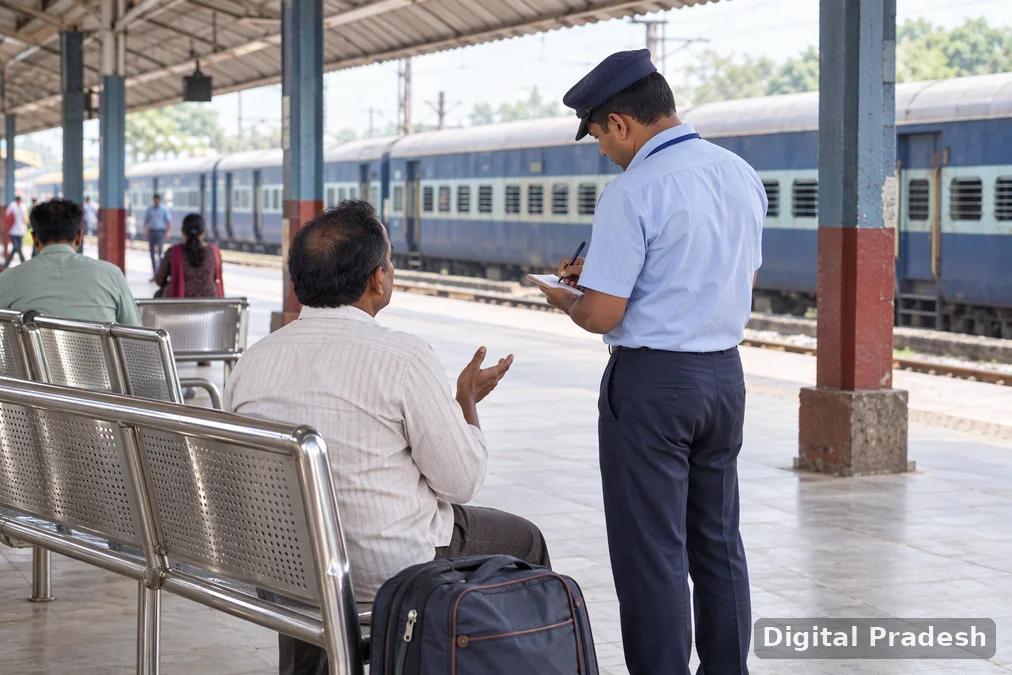
Indian Railways has scheduled Rail Jan Samvaad at all stations across the country on 22 October 2026, the Ministry of Railways said in a release issued by the Press Information Bureau on 12 October. The passenger-engagement exercise forms part of Special Campaign 6, which combines public participation with cleanliness, waste disposal and the clearance of pending matters.
The ministry also identified Rail Jan Yuva Samvaad as a dedicated platform for young people to participate. Its announcement sets out the nationwide schedule; it does not report the outcome of the 22 October interactions.
For Mumbai, mid-day reported on 21 October that Central Railway would hold the programme the following day, allowing passengers to raise railway-related grievances and offer suggestions. The report put the nationwide coverage at more than 7,000 stations and said senior officials would participate in Mumbai.
How Central Railway plans to handle feedback
Central Railway’s arrangements include recording passenger feedback at platforms and other interaction points, according to Urban Acres, which reported details from a Central Railway press release. The railway administration described the exercise as a way to make direct interaction with passengers a regular part of railway management, the publication reported.
According to Urban Acres, Central Railway General Manager Rajeev Shrivastava is scheduled to lead the programme at Lokmanya Tilak Terminus. Nivedita Shukla Verma, Secretary of the Department of Administrative Reforms and Public Grievances and the Department of Pension and Pensioners’ Welfare, is scheduled to participate at Chhatrapati Shivaji Maharaj Terminus.
More than 300 officers have been nominated to participate at Central Railway stations, Urban Acres reported, citing the railway administration. Divisional Railway Managers, branch officers and staff are to lead the exercise in their respective divisions.
The feedback will be separated into short-term, mid-term and long-term matters, according to the Central Railway arrangements reported by Urban Acres. Short-term issues are those that can be addressed immediately or within a brief period. Mid-term concerns require coordination, planning and implementation by the departments involved, while long-term matters may require policy changes, strategic planning or higher-level approval.
That classification describes different administrative routes for handling concerns, rather than a single response process for every complaint. Urban Acres reported that Central Railway intended the system to support a structured review of feedback, with follow-up determined by the category assigned to each issue.
Passenger interactions before the nationwide programme
Rail Jan Samvaad activities had already taken place in parts of the network before the scheduled nationwide exercise. South Eastern Railway said its divisions organised programmes on 13 October 2026 alongside cleanliness drives, waste-management training and sanitation work.
In Adra Division, South Eastern Railway reported a Rail Jan Samvaad drive at Joychandi Pahar station. It also reported intensive cleaning at Joychandi Pahar and Purulia stations and drinking-water quality monitoring by the Medical and Engineering Departments at Talgaria and Chas Road stations.
Ranchi Division organised a passenger-participation programme at Hatia station, while Kharagpur Division held interactions at stations and railway colonies, South Eastern Railway said. Chakradharpur Division also conducted Rail Jan Samvaad programmes to encourage public involvement in keeping railway premises clean.
Northern Railway’s account of a separate Rail Jan Samvaad at Hazrat Nizamuddin station in Delhi describes the subjects passengers were asked to discuss. Officials sought feedback on cleanliness, drinking water and other station amenities, and invited passengers to share grievances, experiences and expectations. The account does not establish a calendar date for that interaction.
Northern Railway said the Hazrat Nizamuddin programme also covered waste segregation and responsible use of station facilities. It described the objective as improving railway facilities through feedback received directly from passengers, placing service concerns alongside the campaign’s cleanliness message.
The campaign’s targets extend beyond passenger meetings
The Ministry of Railways said Special Campaign 6 runs from 2 October to 31 October 2026. Its full name, the Special Campaign for Disposal of Pending Matters 6, reflects an administrative exercise that includes clearing outstanding work as well as improving railway premises.
In its 12 October release, the ministry set out targets covering 1 lakh cleanliness sites, freeing 7 lakh square feet of space and generating Rs 600 crore through scrap disposal by the end of the month. These are campaign targets, not reported achievements.
The ministry said the Secretary, Railway Board, reviewed progress at a video-conference meeting on 8 October. Participants included officials from railway zones and divisions, production units, railway public-sector undertakings and training institutes. The review focused on measurable results and timely disposal of pending matters.
Electronic waste, or discarded electrical and electronic equipment, is another focus. The ministry said the campaign emphasises its collection, segregation and disposal under the E-Waste (Management) Rules, 2022. It also identified practices under the Waste to Wonder initiative for wider adoption.
The ministry’s release included Eastern Railway’s account of training held in Sealdah Division on 11 October. Railway staff, onboard housekeeping personnel, pantry and catering teams, station vendors and contractors were briefed on waste segregation, disposal and penalties for non-compliance. Posters and information material were displayed at stations, colonies and offices.
For passenger grievances, the Central Railway process reported by Urban Acres provides for collection, classification and review. That account does not specify fixed resolution deadlines for the three categories or how passengers will be informed of action taken on their individual submissions.

Please log in to leave a comment.


