Satyendra Kumar: CBI arrests fodder scam accused in Lucknow
CBI said it arrested Satyendra Kumar at Lucknow railway station after tracking his train journey from Guna. He was being taken to Ranchi to face court proceedings, not following a conviction.
In this article
Listen to this article
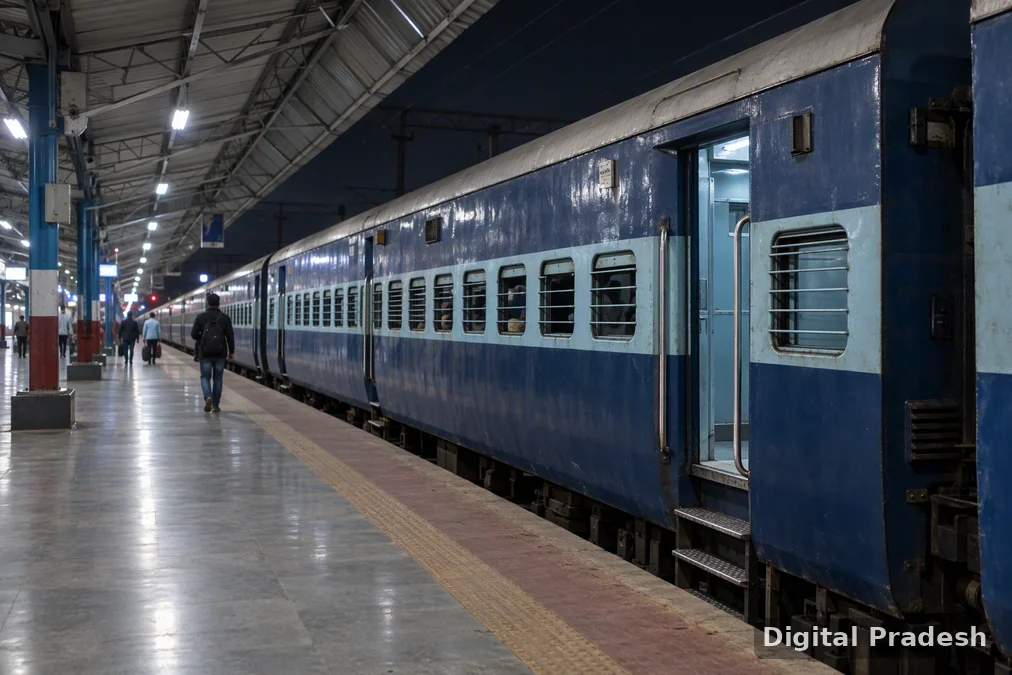
The Central Bureau of Investigation (CBI) said it arrested Satyendra Kumar, wanted for trial in a fodder scam case, at Lucknow railway station around midnight after tracking his train journey from Guna in Madhya Pradesh on 22 October 2026. The agency said Kumar was being taken to Ranchi on transit remand for production before the court.
According to the CBI’s press statement, Kumar absconded after the agency filed a charge sheet in 2001. A charge sheet sets out the investigating agency’s accusations before a court; it is not a finding of guilt.
The CBI described Kumar as a proclaimed offender, a court-declared status associated with his failure to appear for proceedings. The agency said the court issued a permanent arrest warrant because he did not appear to face trial. It described its search for him as lasting more than 25 years.
The development concerns Kumar’s arrest and return for court proceedings, not a decision on the allegations against him. The CBI’s statement did not announce a conviction or disclose the specific offences in his charge sheet.
Surveillance led to the Lucknow interception
The CBI said investigators traced Kumar’s location to Nepal through physical surveillance, technical monitoring and information from human sources. Its statement did not specify how long he had been there or when investigators established his location.
The agency subsequently learnt that Kumar had entered India and would travel from Guna to Lucknow by train on 22 October. It said specific intelligence about that journey prompted the formation of a dedicated team to arrest him.
Officers reached Lucknow railway station before the train carrying Kumar arrived, according to the CBI. The team apprehended him around midnight and subsequently placed him under arrest.
The account describes an arrest in India after investigators tracked Kumar to Nepal. The CBI did not describe an extradition, the formal transfer of a wanted person between countries, or a handover by Nepalese authorities. It also did not identify the train or disclose the technical methods used to track his movements.
BusinessLine reported the agency’s account of the operation, including the deployment at the station before the train arrived. A PTI report published by Deccan Herald on 23 October 2026 also reported the arrest and planned transfer to Ranchi. That publication date is distinct from the 22 October journey identified in the CBI’s statement.
Kumar’s alleged role remains unspecified by CBI
The Times of India, in its report dated 23 October 2026, described Kumar as an alleged supplier. The CBI’s press statement did not identify his occupation or explain what he was accused of supplying.
Hindustan Times likewise reported that the agency had not elaborated on Kumar’s role in the fodder scam cases. The official account did not give a case number, identify the treasury involved or state an amount allegedly linked to him.
Those details matter because the fodder scam involved multiple prosecutions, rather than a single case against all accused. Hindustan Times described the wider allegations as fraudulent withdrawals from the undivided Bihar treasury through fake bills for fodder, medicines and equipment. That background does not establish which transactions form part of the case against Kumar.
Neither the CBI statement nor the reports cited here included a response from Kumar or a lawyer representing him. The agency’s account therefore sets out the basis it gave for the arrest, without addressing any defence he may present in court.
The wider fodder scam proceedings
The Times of India reported that the broader investigation concerned funds taken from Bihar’s Animal Husbandry Department during the 1990s. Its account said politicians, bureaucrats and suppliers had been convicted in cases concerning illegal treasury withdrawals.
Hindustan Times put the alleged fraudulent withdrawals across the wider scam at around Rs 950 crore between 1992 and 1995. That is a figure for the broader scandal, not an amount the CBI attributed to Kumar in its arrest announcement.
Mint’s historical account places the discovery of the scam in 1996, when Chaibasa deputy commissioner Amit Khare raided the Animal Husbandry Department. It reported that the Patna High Court asked the CBI to investigate.
Mint also reported that cases were transferred to Jharkhand after the state was created from Bihar in 2000. That provides context for proceedings in Ranchi concerning transactions associated with undivided Bihar.
Among the outcomes in the wider prosecutions, Hindustan Times reported that former Bihar chief minister Lalu Prasad Yadav had been convicted in five cases involving fraudulent withdrawals from the Chaibasa, Deoghar, Dumka and Doranda treasuries during his tenure. BusinessLine also identified former chief minister Jagannath Mishra among those convicted in cases linked to the scam. Those outcomes are separate from the trial Kumar is wanted to face.
For Kumar, the immediate procedural step identified by the CBI is production before the court in Ranchi. Transit remand allows an arrested person to be taken in custody to the court concerned in another location; it does not resolve the criminal allegations.
Jagran reported that Kumar would be produced before a special CBI court in Ranchi. The CBI’s statement referred only to the competent court and did not specify a production date or report that the appearance had already taken place.

Please log in to leave a comment.


