Supreme Court: Plea to merge 35 cybercrime cases withdrawn
The Supreme Court declined to entertain the consolidation plea on 28 October, citing victims' interests and investigative needs, according to reports. The petitioners then withdrew it.
In this article
Listen to this article
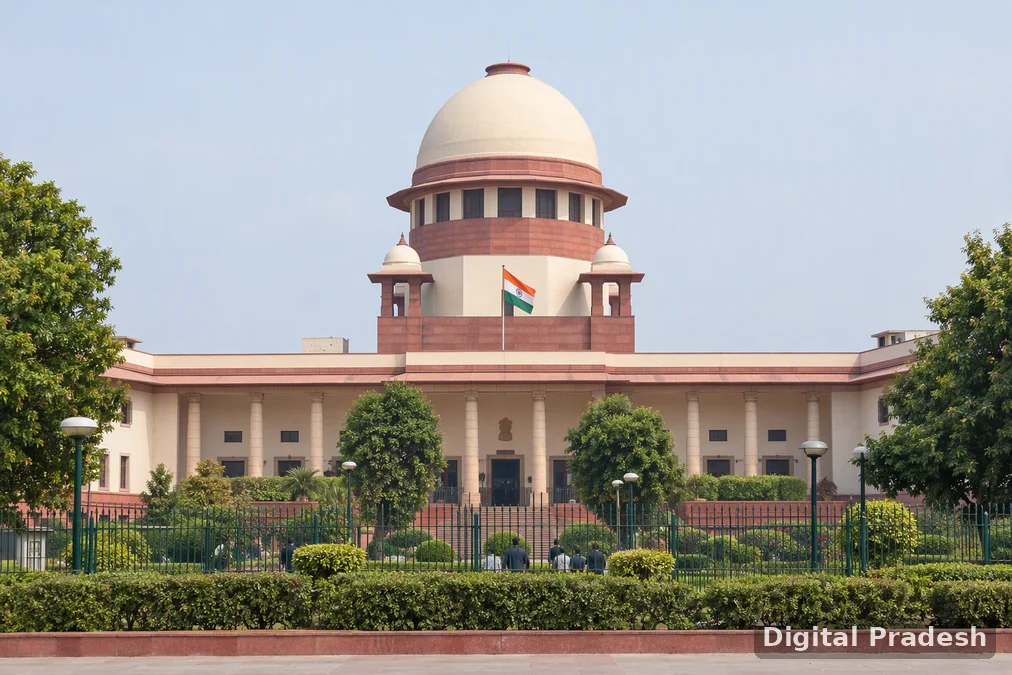
The Supreme Court on 28 October 2026 declined to entertain a plea to consolidate 35 cybercrime cases against two people across 12 states, Moneycontrol reported. The petitioners, Gourab Kumar Saha and Nidhi Bhandari, subsequently withdrew their plea after the bench questioned whether their convenience could override victims’ interests and investigations in different states.
A bench comprising Chief Justice of India Surya Kant and Justices Joymalya Bagchi and V Mohana heard the matter. According to Moneycontrol, the cases concern allegations that the petitioners allowed their company’s bank account to receive money linked to cybercrime, including so-called digital arrest scams.
In these scams, perpetrators impersonate law enforcement officials and use threats of arrest to extract money, Moneycontrol reported. The bench described such offences as “digital dacoity” while expressing concern about organised networks targeting senior citizens and retired people.
The New Indian Express also reported that the plea was withdrawn after the court refused to consolidate the cases. Its account identified Delhi, Maharashtra, Kerala, Telangana and Gujarat among the jurisdictions where proceedings were pending.
The written order for the 28 October hearing was not available for this report. The account of that hearing rests on the named publications’ reporting, which describes a withdrawn consolidation plea and oral observations, not a determination of the petitioners’ guilt.
Petitioners disputed knowing involvement
The petitioners sought consolidation, or bringing the proceedings together, because similar allegations were being investigated by different agencies, according to Moneycontrol. They maintained that their company’s account had been used without their knowledge and said they approached cybercrime authorities after discovering its alleged misuse. One petitioner also said they had been a victim.
Moneycontrol reported that the petitioners described the allegations against them as involving Rs 80 lakh in one account and Rs 1.2 crore in another. These were their submissions about the amounts involved, rather than figures established by a finding at this hearing.
The Bar Bulletin identified the matter as Gourab Kumar Saha & Anr. v. Union of India & Ors., W.P.(Crl.) No. 439/2026. It reported that counsel sought limited notice to the authorities and referred to prosecution documents concerning the jurisdiction of the Delhi Cybercrime Cell.
According to The Bar Bulletin, counsel argued that the prosecution’s own documents indicated that cases were being investigated by the same cybercrime agency, and that separate investigations could duplicate work.
The bench was unconvinced, Moneycontrol reported. It referred to the alleged use of the company’s account as a “mule account”: an account used to receive money obtained through the alleged fraud.
Victims’ location and investigative needs
The Chief Justice referred to an 81-year-old man from Ernakulam, Kerala, who was allegedly cheated of Rs 1.90 crore, with the money deposited into an account linked to the petitioners, according to Moneycontrol. The New Indian Express also reported the reference to this alleged loss.
Justice Bagchi questioned why victims from different parts of the country should have to travel to Delhi because the accused wanted the cases brought together.
“Your right to seek transfer of cases to a place of your convenience cannot override the right of the victims and the investigating agency,” he said, according to The New Indian Express.
That publication reported that Justice Bagchi distinguished the petitioners’ request from a possible request by Delhi Police for consolidation to facilitate investigation. The court could consider the latter, he indicated.
The Bar Bulletin reported that the bench also questioned the argument that the place where money was received should determine where the alleged offences were prosecuted. Its account described the court as placing weight on where victims had been defrauded and the inconvenience they could face if proceedings moved to Delhi.
Moneycontrol additionally reported strong oral remarks by the Chief Justice about bail and punishment, attributing its quotation to LiveLaw. According to that account, he said that, given the opportunity, the court would set aside bail and explore punishment before trial if the law permitted it. Those remarks must be distinguished from the procedural outcome: the reporting describes withdrawal of the consolidation petition, not an order cancelling bail or imposing punishment.
A separate proceeding over forged court documents
The Supreme Court’s scrutiny of digital arrest scams predates this petition. Its record of proceedings dated 17 October 2025, in In Re: Victims of Digital Arrest Related to Forged Documents, documents a separate case initiated by the court on its own motion, known as a suo motu proceeding.
That order was issued by Justices Surya Kant and Joymalya Bagchi. It records a complaint dated 21 September 2025 from a senior citizen couple who alleged that fraudsters had taken their life savings during a scam between 3 and 16 September 2025.
According to the order, the complainants said people impersonating Central Bureau of Investigation officers, Enforcement Directorate officials and judicial authorities contacted them by telephone and video calls. They allegedly displayed forged Supreme Court orders through WhatsApp and video conferencing, then used threats of arrest and property seizure to coerce the couple into making multiple bank transfers.
The court’s order identified fabricated freeze, arrest and surveillance documents, as well as fictitious proceedings purportedly before the Bombay High Court. It said misuse of courts’ names, seals and judicial authority raised concerns beyond ordinary cheating or cybercrime.
The bench expressed a preliminary view that coordinated action by central and state police was needed to investigate the extent of the criminal activity. It issued notices to the Union government through the Ministry of Home Affairs, the Central Bureau of Investigation, Haryana and the Superintendent of Police, Cyber Crime, Ambala. It also requested the Attorney General’s assistance and directed the Ambala officer to submit an investigation status report.
That separate proceeding did not resolve the petitioners’ request to bring their cases together. In the 28 October hearing, Moneycontrol reported, the bench indicated that they could approach the Delhi High Court about consolidating cases registered in Delhi, which they said were being investigated by the Mandir Marg police station. The report describes that as a possible application, not consolidation already granted.

Please log in to leave a comment.


