ABHAY: CBI launches notice checker, targets cyber fraud
The CBI has launched ABHAY on its official website to help citizens check whether notices issued in its name are genuine or potentially fake.
In this article
Listen to this article
The Central Bureau of Investigation (CBI) has announced the launch of ABHAY, an artificial intelligence-based helpbot that lets citizens check whether a notice issued in the agency’s name is genuine or potentially fake. In its launch statement, the CBI said the real-time notice-authentication service is intended to counter cyber fraud, including scams in which criminals impersonate investigators and threaten people with “digital arrest”.
The CBI said there is no legal concept of “digital arrest” under Indian law. The agency described forged notices as a means of drawing victims into a fabricated legal process, making the authenticity of the first communication an important point at which to interrupt the deception.
The launch statement does not specify a launch date. It describes ABHAY as available through the CBI’s official website at any time.
How ABHAY checks a notice
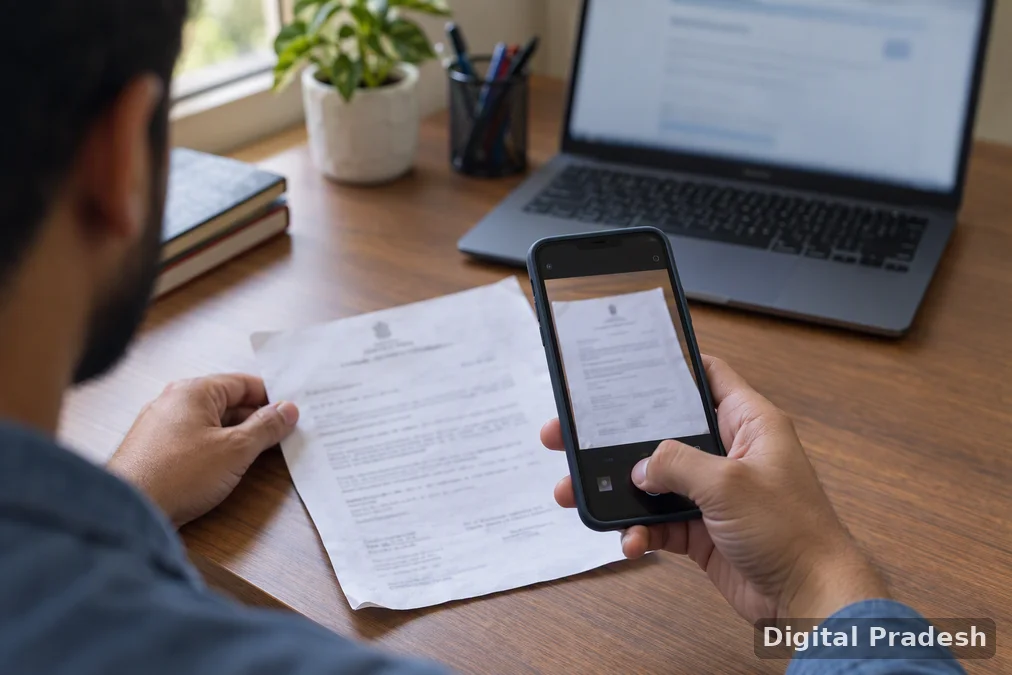
According to the CBI, the verification process begins with the ABHAY logo on the agency’s homepage. Users authenticate their mobile number through an OTP, or one-time password, and then upload a scanned copy of the notice they have received.
The helpbot then provides information about the notice’s authenticity, indicating whether it is genuine or potentially fake, the agency said. The announced service concerns notices received in the CBI’s name; the statement does not describe it as a verification tool for communications from every police force, regulator or investigating agency.
The distinction between those two results matters to the service’s stated purpose. ABHAY is presented as a way to check the document used to establish an apparent official identity, rather than as a mechanism for deciding the underlying criminal allegations in that document.
The CBI said it developed the tool because citizens often find it difficult to distinguish an official notice from a forgery. It also identified advances in artificial intelligence and deepfake technology as factors making it harder for people to separate genuine material from fabricated content.
Although the agency describes ABHAY as AI-based, its statement explains the user-facing process rather than the technical method by which uploaded notices are assessed.
A forged notice can begin a fabricated legal process
In the CBI’s account of the scam, a victim receives a false notice that appears to come from a legitimate law-enforcement agency. The document makes unfounded criminal accusations and creates fear.
Once the victim accepts the impersonator’s authority, the fraudsters construct a fake legal process and keep the person under surveillance for days in the name of “digital arrest”, the agency said. The supposed detention is part of the deception, not a procedure recognised by law.
A separate advisory issued by the Indian Cyber Crime Coordination Centre (I4C), dated 6 March 2025, describes how impersonation can develop into prolonged video calls and demands for payment. That advisory provides background on the fraud; it does not announce ABHAY.
I4C said complaints on the National Cyber Crime Reporting Portal involved criminals posing as police personnel, CBI officers, narcotics officials, Reserve Bank of India representatives and Enforcement Directorate personnel, among others. It described the activity as organised online economic crime understood to involve cross-border crime syndicates.
According to the advisory, callers often use spoofed numbers, which disguise the number’s apparent origin. They accuse the intended victim of offences involving a parcel containing drugs, fake passports or SIM cards, misuse of an Aadhaar card or mobile number, or suspicious money entering a bank account.
The accusations can also concern a relative supposedly involved in criminal activity or an accident, I4C said. These are scenarios deployed by the scammers, not findings against the people receiving the calls.
I4C described victims being compelled to remain on Skype or WhatsApp video calls while criminals used fabricated police-station settings to reinforce their assumed authority. The payment demand follows: money is sought to settle the supposed matter or prevent exposure of the invented case.
Official warnings extend beyond fake CBI notices
The CBI’s announcement also warned about fraudulent investment schemes and calls impersonating law-enforcement or regulatory agencies. It urged people receiving supposed digital-arrest calls not to panic or comply with the callers’ instructions, and asked that suspicious activity be reported to the relevant authorities or the cybercrime portal.
I4C’s advisory sets out additional precautions: verifying a caller’s identity directly with the nearest police station, checking requests before sharing personal or financial information, and speaking to relatives or friends before transferring money. It identifies 1930 as a telephone channel for reporting cyber fraud, alongside the National Cyber Crime Reporting Portal.
The CBI also said it would pursue legal action against individuals and entities that assist cybercriminals through misuse of banking and telecommunications infrastructure. The launch statement does not identify particular individuals or institutions facing such action.

Please log in to leave a comment.


