NVS-03 navigation satellite: ISRO launches to transfer orbit
ISRO launched NVS-03 aboard GSLV-F18 and confirmed its placement in a transfer orbit. The NavIC satellite must undergo orbit-raising manoeuvres before entering operational service.
In this article
Listen to this article
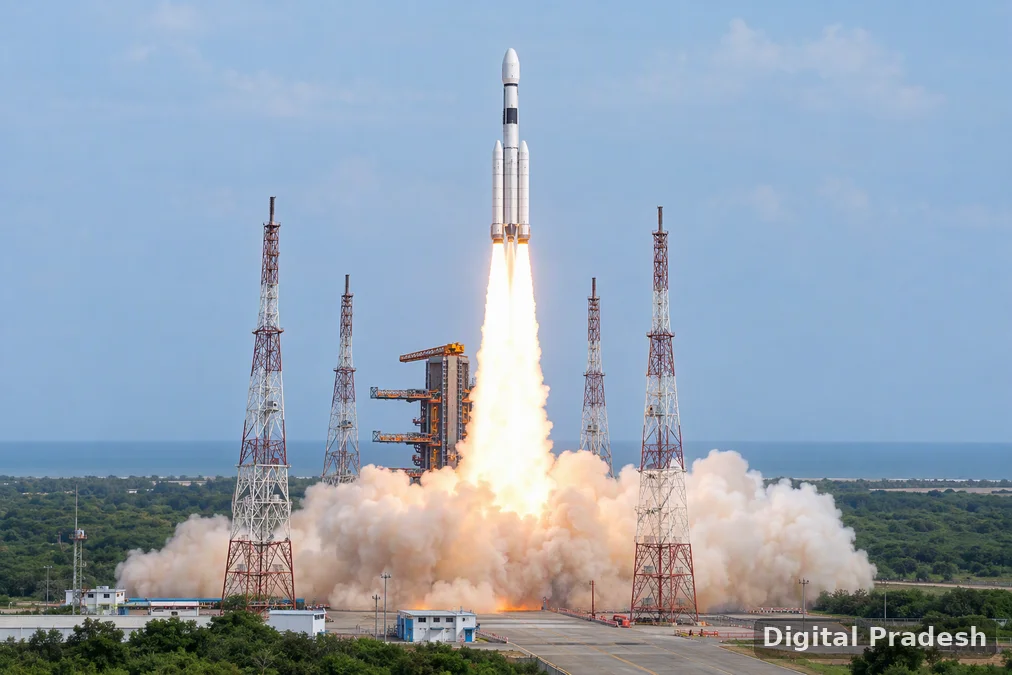
The Indian Space Research Organisation (ISRO) successfully launched GSLV-F18 carrying the NVS-03 navigation satellite from the Second Launch Pad at Satish Dhawan Space Centre, SHAR, the agency said in its mission update. Prime Minister Narendra Modi congratulated the scientists and engineers, describing the mission as a step towards strengthening India’s indigenous NavIC navigation system, according to the Prime Minister’s Office.
ISRO said the rocket placed NVS-03 into a Geosynchronous Transfer Orbit, the intermediate orbit used before moving the satellite to its intended operating position. The agency identified the mission as the 20th flight of its Geosynchronous Satellite Launch Vehicle, or GSLV.
NVS-03 is the third satellite in the next-generation navigation series intended to maintain continuity of services provided by the IRNSS series, ISRO said. Its equipment includes an indigenous atomic clock alongside procured atomic clocks, and an additional navigation signal intended to broaden the system’s capabilities.
The confirmed launch and transfer-orbit insertion are distinct from the satellite entering operational service. The New Indian Express reported that orbit-raising manoeuvres would follow over the next few days to move NVS-03 to its final position.
What NVS-03 adds to NavIC
NavIC, short for Navigation with Indian Constellation, is India’s independent regional satellite navigation system. ISRO’s mission brochure describes its purpose as providing position, navigation and timing services across India and an area extending about 1,500 km beyond the Indian landmass.
Those services establish location, support navigation and provide a time reference. The New Indian Express reported that NavIC applications include maritime safety, vehicle tracking and emergency alerts.
According to ISRO, NVS-03 carries an L1 navigation signal in addition to the existing L5 and S signals. These labels identify the radio-frequency bands used to transmit navigation information. The New Indian Express reported that the civil L1 band supports compatibility with consumer devices such as smartphones, smartwatches and fitness trackers.
The addition is part of an existing technological progression rather than a capability appearing for the first time on NVS-03. In an October 2023 presentation titled “NVS-01 performance: L1 Signal, Data & Indigenous Atomic Clock”, ISRO identified L1 navigation signals and an Indian rubidium atomic frequency standard among the new elements introduced on NVS-01.
That presentation recorded NVS-01’s launch on 29 May 2023 and the start of navigational services for users on 4 July 2023. It also said the ground segment had been upgraded to evaluate L1 signal performance.
Modi linked NVS-03’s enhanced capabilities to greater self-reliance in critical technologies and navigation services benefiting citizens, the Prime Minister’s Office said. That statement set out the government’s assessment of the mission’s importance; ISRO’s launch update established the narrower technical milestone of placement in transfer orbit.
Why the onboard clocks matter
ISRO’s NVS-03 mission description confirms a combination of indigenous and procured atomic clocks. The New Indian Express identified the indigenous instrument as a rubidium atomic clock intended to improve positioning accuracy.
An atomic clock supplies a highly stable timing reference. Its relevance to navigation was explained in ISRO’s presentation “Indigenous Atomic Clock and Monitoring Unit for NavIC”, delivered on 10 December 2019: jumps and drifts in a clock’s frequency affect estimates of a user’s position.
The presentation described a monitoring unit that generates a stabilised master timing reference and outlined methods for correcting frequency jumps and drift. The engineering challenge therefore involves not only developing a clock, but also monitoring and maintaining the timing signal used by the navigation system.
ISRO’s October 2023 presentation subsequently said the indigenous rubidium frequency standard had flown for the first time on NVS-01 and was driving that satellite’s navigation signals. Its reported performance at that time was normal. Those findings concern NVS-01, not measured performance of the newly launched NVS-03.
The same presentation showed that NavIC depends on ground infrastructure as well as satellites. It assigned navigation-parameter generation to the ISRO Navigation Centre and provision of ground reference time to the IRNSS Reference Network Timing Facility.
Launch follows NVS-02 setback
The NVS-03 launch follows a problem with its predecessor. The New Indian Express reported that NVS-02 failed to reach its intended orbit after its January 2025 launch because of a fuel-valve connector malfunction.
According to the newspaper, ISRO subsequently reviewed the satellite’s engineering configuration and changed the pyrotechnic valves associated with the propellant system. That account provides context for why the stages after launch remain important to the mission outcome.
For GSLV-F18, ISRO’s pre-launch brochure specified a three-stage vehicle approximately 50 metres tall, with a lift-off mass of about 420 tonnes and a payload mass of about 2,250 kg. The agency’s subsequent mission update confirmed successful transfer-orbit insertion, moving the mission beyond the planned launch described in the brochure.
The New Indian Express reported that NVS-03’s solar panels had deployed and that ISRO teams described the satellite’s health as good. It identified the intended final position as 32.5 degrees East and reported that orbit-raising manoeuvres would precede operational service there.

Please log in to leave a comment.


