Hyderabad couple: Rs 1.52 crore lost in alleged fraud
An elderly Bowenpally couple transferred their savings after callers used arrest threats and forged official orders, The New Indian Express reported; the report gives no details of refunds.
In this article
Listen to this article
An 80-year-old retired bank manager and his wife in Hyderabad’s Bowenpally were reportedly defrauded of Rs 1.52 crore by callers impersonating investigators and government authorities, according to The New Indian Express. The newspaper reported that the couple transferred their life savings after receiving threats of arrest and forged documents presented as official orders.
The New Indian Express reported that the man told police the first call came on 19 October from people posing as representatives of Data Protection India Limited, Mumbai. The callers falsely alleged that his Aadhaar was linked to money laundering and anti-national activities.
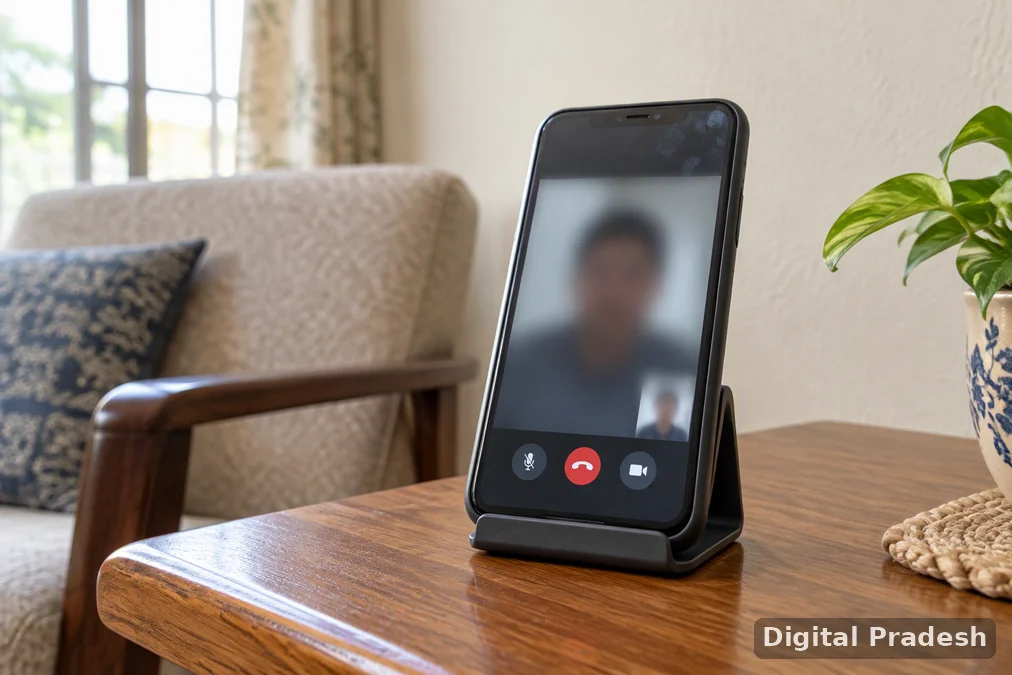
According to the newspaper, other callers subsequently impersonated Mumbai Cyber Crime Police, the Central Bureau of Investigation (CBI), the Enforcement Directorate (ED) and other government authorities. They contacted the couple through WhatsApp video calls, subjected them to a so-called digital arrest and threatened to implicate their children.
The Indian Cyber Crime Coordination Centre (I4C), in its advisory dated 6 March 2025, states that there is no concept of digital arrest under Indian law. It describes a method of intimidation in which criminals posing as officials keep victims on video calls and pressure them into complying with demands for money.
Forged orders and a promise to return the money
The callers sent the Hyderabad couple forged arrest warrants and fabricated orders purportedly issued by the Supreme Court and the Reserve Bank of India, The New Indian Express reported. These were documents used by the alleged fraudsters, not directions from either institution.
The newspaper reported that the couple were persuaded to transfer money through RTGS, a bank-to-bank electronic transfer system, to designated beneficiary accounts on the pretext of verification. The callers promised to return the money within five days.
According to The New Indian Express, the couple realised they had been cheated after telling their son about the incident on 28 October, and then approached police. The report does not identify the recipients of the transfers or state whether any money had been recovered.
The account describes both threats and an assurance of repayment. According to the newspaper, the callers presented the transfers as a verification requirement, and the couple parted with their savings believing the money would be returned.
How impersonation creates pressure
I4C’s March 2025 advisory describes a sequence in which scammers first assume the identity of a government agency and then accuse the person contacted of involvement in illegal activity. Its examples include alleged misuse of Aadhaar or a registered mobile number, money laundering and supposed offences involving relatives.
The advisory says some victims are forced to remain on video calls, often through WhatsApp or Skype, until the criminals’ demands are met. It also describes fake police-station settings used to make callers appear to be genuine law-enforcement officers. The New Indian Express report does not establish that such a setting was used in the Bowenpally case.
An explanatory article by Major Sadhna Singh, a consultant at NITI Aayog, describes this manipulation as social engineering: exploiting trust, fear or urgency to secure compliance. The article, titled “Digital Arrest: The Modern-Day Cyber Scam”, explains how fake documents and doctored arrest warrants can lend apparent credibility to threats.
Singh’s article describes demands presented as a fine or security deposit to avoid legal action. It also says scammers may instruct victims not to involve relatives or lawyers. These are descriptions of the broader scam method, not additional findings about what happened to the Hyderabad couple.
I4C’s advisory recommends checking a caller’s identity directly with the nearest police station and speaking to relatives or friends before transferring money. It identifies the National Cyber Crime Reporting Portal and helpline 1930 as channels for reporting cyber fraud.
A separate Supreme Court proceeding on forged documents
The misuse of judicial documents also prompted Supreme Court proceedings in a separate case. On 17 October 2025, Justices Surya Kant and Joymalya Bagchi considered In Re: Victims of Digital Arrest Related to Forged Documents, a suo motu proceeding, meaning one initiated by the court itself.
The court’s order recorded a complaint from another senior-citizen couple alleging that impersonators had used forged Supreme Court orders and threats of arrest and property seizure to extract their life savings through multiple bank transactions. That complaint concerned events in September 2025 and two cases registered with the Cyber Crime Branch in Ambala, not the Hyderabad incident.
The order described fabricated documents presented as freeze, arrest and surveillance orders, as well as fictitious proceedings before the Bombay High Court. It also recorded false representations that the CBI and ED were investigating the victims.
The bench said fabrication of judicial orders and misuse of courts’ names, seals and authority threatened public trust in the judicial system. It expressed a preliminary view that coordinated action by central and state police was needed.
The court issued notices to the Union government through the Ministry of Home Affairs, the CBI, the Haryana government and the Superintendent of Police, Cyber Crime, Ambala. It also directed the Ambala officer to submit an investigation status report. Those directions concerned that proceeding and do not establish an investigative outcome in the Bowenpally case.
Telangana’s documented refund process
Separately, the Telangana Cyber Security Bureau said in a statement dated 28 March 2026 that it had facilitated refunds of Rs 24.91 crore to 4,627 cybercrime victims through activities before and on the first Lok Adalat of that year. Lok Adalats are forums for settling disputes.
The bureau said the process involved the Telangana State Legal Services Authority, police units, banks and digital payment service providers. It described coordination with financial institutions and judicial facilitation as parts of its recovery mechanisms, covering cases involving UPI fraud, investment scams, impersonation and other digital offences.
Those figures cover other cybercrime cases and are not evidence of reimbursement to the Bowenpally couple. The New Indian Express report leaves their recovery position unresolved: it records their approach to police but gives no details of arrests, frozen beneficiary accounts or refunds.

Please log in to leave a comment.


