Malaysia tool exports: India orders provisional assessment
Specified tools, rock breakers and components exported from Malaysia now require provisional assessment and importer guarantees while an anti-circumvention probe continues; no new duty rate has been set.
In this article
Listen to this article
The Centre has ordered provisional assessment of specified alloy steel tools, hydraulic rock breakers and listed components exported from Malaysia to India while an investigation examines alleged avoidance of existing anti-dumping duties. The Ministry of Finance’s notification No. 27/2026-Customs (ADD), dated 5 November 2026, requires importers to furnish a guarantee to cover any anti-dumping duty that may become payable following the investigation and the government’s decision.
The measure concerns alleged circumvention of duties imposed on the specified goods originating in or exported from China and South Korea. According to the ministry’s notification, the designated investigating authority observed prima facie evidence of country-based circumvention through Malaysia. That is a preliminary assessment, not a final determination that the duty has been circumvented.
For affected importers, the immediate change is a provisional customs assessment backed by a guarantee. The notification does not set a new anti-dumping duty rate for Malaysian exports or announce the investigation’s final outcome.
Which goods the order covers
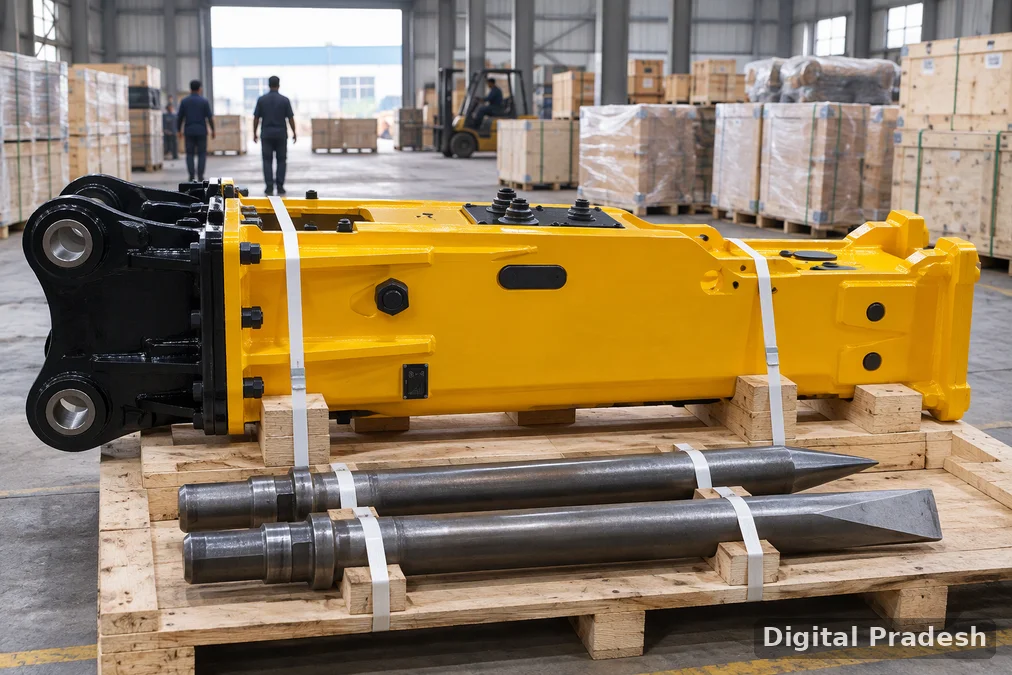
The Finance Ministry identifies the products under investigation as alloy steel chisel/tool and hydraulic rock breakers in fully assembled condition. Its order also expressly covers seven listed assemblies, sub-assemblies or components of hydraulic rock breakers exported from Malaysia.
Those seven entries are the front head; back head; piston for a hydraulic cylinder or rock breaker; cylinder body or hydraulic unit; bracket; frame; and cylinder for a hydraulic rock breaker. The notification explains that the hydraulic body consists of the front head, back head, cylinder and piston.
This component coverage means the order is not confined to complete, assembled rock breakers. The ministry ties the seven entries to Table D1 of notification No. 11/2024-Customs (ADD), dated 27 June 2024, which imposed the existing anti-dumping duties.
The geographical wording also matters. The new order covers the specified products “exported from Malaysia”, rather than limiting its wording to goods originating there. By contrast, the ministry describes the underlying duty measure as covering the subject goods originating in or exported from China and South Korea.
The notification is therefore product-specific. It does not direct provisional assessment of Malaysian imports generally.
How the guarantee requirement works
Under the Finance Ministry’s order, provisional assessment means the covered imports remain subject to an assessment that is not yet final while the anti-circumvention process runs its course. The accompanying guarantee is intended to secure payment of a possible subsequent anti-dumping liability.
The ministry leaves the guarantee to the proper officer of customs, who will determine what is appropriate. The notification does not prescribe a single guarantee amount, percentage or standard form for all covered imports.
Its wording makes the potential liability conditional: the guarantee is for anti-dumping duty, “if any”, that becomes payable following the investigating authority’s recommendations and the Centre’s decision. Furnishing that security is therefore distinct from the notification itself imposing a specified new duty.
The order also preserves the earlier measure. In an express clarification, the Finance Ministry says duties imposed under the 27 June 2024 notification will continue to be levied and collected wherever applicable, according to that notification’s provisions. The provisional-assessment requirement does not suspend those existing duties.
From the original duty to the Malaysia investigation
The chronology recorded in the Finance Ministry’s notification begins with final findings dated 28 March 2024. In those findings, the designated authority recommended anti-dumping duties on the subject goods from China and South Korea.
The Centre subsequently imposed the duties through the 27 June 2024 notification. The present proceeding examines alleged circumvention of that measure through exports from Malaysia, rather than announcing another completed investigation into the original imports.
According to the ministry, the anti-circumvention investigation began through initiation notification F. No. 07/20/2026-DGTR, dated 28 September 2026. An anti-circumvention inquiry, in this context, examines whether imports through another country are being used to avoid an existing anti-dumping duty.
The 5 November order is a separate procedural development following that initiation. The ministry says the designated authority recommended both provisional assessment and an appropriate importer guarantee after observing preliminary evidence of circumvention through Malaysia.
The decision still pending
The Finance Ministry invokes Section 9A(1A) of the Customs Tariff Act, 1975, read with Rule 26(4A) of the 1995 anti-dumping rules, for the provisional-assessment order. It records that the investigation was initiated under the same statutory subsection read with Rules 25 and 26.
The notification reports the authority’s preliminary assessment but does not set out the underlying trade data, identify individual exporters alleged to have circumvented the duty, or reproduce submissions from importers or Malaysian producers. It consequently provides no basis for attributing wrongdoing to a particular company.
The ministry specifies no calendar end date for provisional assessment. Instead, the covered imports will remain under that arrangement until the Central Government takes its decision under Rule 27(3), following the anti-circumvention investigation.

Please log in to leave a comment.