NIA: Searches eight locations in counterfeit Indian currency case
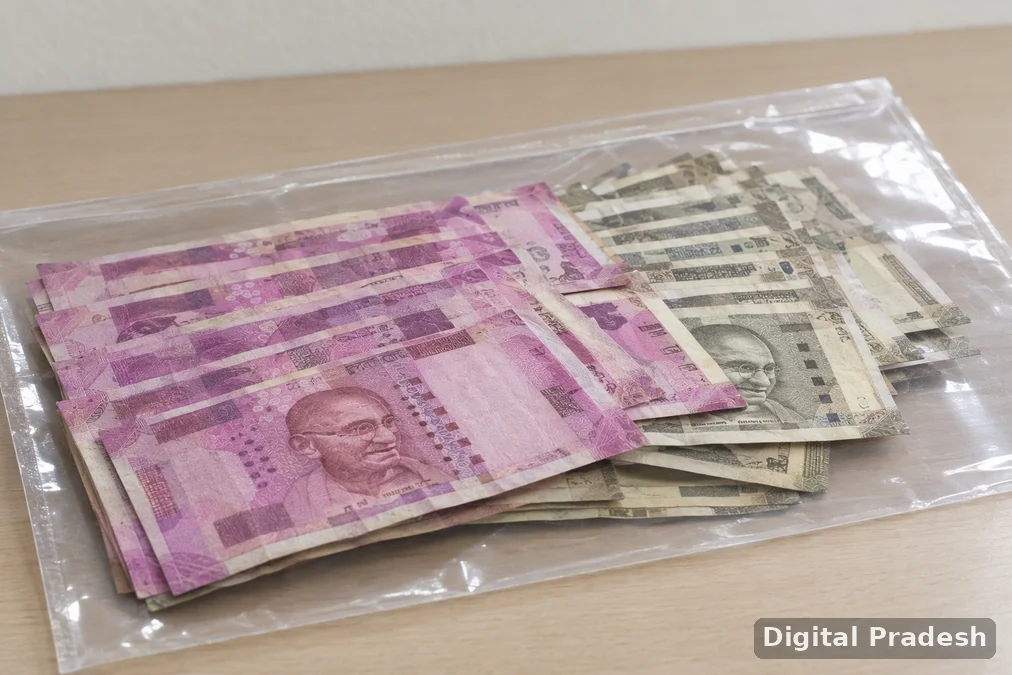
NIA reported searches at eight locations across three states in a case involving an earlier recovery of counterfeit notes with a face value of Rs 2,48,500.
In this article
Listen to this article
The National Investigation Agency (NIA) said it searched eight locations across Bihar, Jharkhand and West Bengal on 4 November 2026 in a case concerning the recovery of counterfeit Indian currency with a face value of Rs 2,48,500. The agency identified the investigation as case RC-02/2026/NIA/PAT.
The searches covered two locations in Aurangabad and three in Gaya district of Bihar, two in Jharkhand’s Hazaribagh district and one in West Bengal’s Malda district, IANS reported in a dispatch published by Punjab Kesari. The operation extended beyond Aurangabad, where the counterfeit notes at the centre of the case had been recovered.
NIA teams seized digital devices, documents described as incriminating, Bangladeshi currency and other materials suspected to be relevant to the investigation, according to the IANS report. The Rs 2,48,500 figure concerns the earlier recovery of counterfeit Indian notes, rather than a fresh seizure of that amount during the November searches.
The reports do not specify the amount of Bangladeshi currency seized or identify which items were recovered at each location. They also do not establish where the counterfeit Indian notes were manufactured. The reported recovery of foreign currency therefore does not, on the available evidence, establish the origin of the counterfeit notes.
From the Madanpur case to the NIA investigation
The case began with a recovery of counterfeit notes within the jurisdiction of Madanpur police station in Bihar’s Aurangabad district. Police registered the case on 15 August 2026 against four accused, according to Asianet News’s account of the NIA statement.
IANS, in the report published by Punjab Kesari, identified those accused as Surendra Kumar, Vijay Yadav, Ranjan and Pradeep Saw, alias Pradeep Kumar Saw. Their identification as accused records their position in the investigation; it is not a finding of guilt.
The NIA re-registered the case on 18 October and took over the investigation under an order of the Ministry of Home Affairs, according to the Asianet News report. The November searches followed that transfer from the local police to the central agency.
The NIA alleged that its investigation had revealed the accused persons’ involvement in smuggling fake Indian currency notes, Asianet News reported. That is the agency’s allegation, not a judicial determination of the accused persons’ roles.
IANS reported that the searches were intended to gather further evidence and establish the wider network allegedly involved in the operation. According to that report, investigators were examining the seized devices, documents and other materials to identify possible links and determine the network’s extent.
ETV Bharat also reported that investigators were examining potential links between suspects across the three states. Neither that account nor the IANS report sets out the contents of the seized devices or explains what the documents establish about any particular accused person.
What the face value establishes, and what it does not
The amount attached to a counterfeit-currency recovery describes the denominations printed on the notes. The Central Government’s Investigation of High Quality Counterfeit Indian Currency Offences Rules, 2013 defines “face value” as the arithmetic total of the values printed on seized counterfeit notes. It is not a measure of genuine money recovered.
Those rules also distinguish a suspected counterfeit-currency recovery from the forensic findings required to invoke specified provisions concerning high-quality counterfeit currency under the Unlawful Activities (Prevention) Act, 1967.
Under Rule 3, an investigating officer must obtain a report from an authorised forensic laboratory before applying Section 15(1)(a)(iii-a) read with Section 16 of that Act. The rules concern the investigation of production, smuggling or circulation of high-quality counterfeit currency in relation to damage to India’s monetary stability.
The forensic procedure addresses whether security features specified in the law have been imitated or compromised. Under Rule 6, a preliminary report may be limited to that question, while the complete forensic report for prosecution must be provided before the investigation is completed.
The rules identify authorised forensic bodies, including government forensic laboratories and laboratories under the Bharatiya Reserve Bank Note Mudran Private Limited or the Security Printing and Minting Corporation of India Limited. They also provide for an empowered officer to assess the facts and record reasons when ordering investigation under the specified provisions.
These requirements are legal background, not findings about the Aurangabad recovery. The NIA extract and reports about the searches do not identify the statutory sections invoked in this case or disclose a forensic determination that the seized notes qualify as high-quality counterfeit currency.
The immediate investigative task described by IANS remains examination of the materials seized on 4 November to establish possible connections and the extent of the alleged smuggling network. The reports do not disclose what that examination has established.

Please log in to leave a comment.


