Pune Metro: Modi to inaugurate Pink Line on 3 November
Modi will inaugurate Pune Metro's Pink Line and lay foundation stones for four Phase-II corridors on 3 November 2026, the PMO said. A passenger-service start date has not been announced.
In this article
Listen to this article
Prime Minister Narendra Modi will inaugurate Pune Metro’s Pink Line and lay foundation stones for four Phase-II corridors worth a combined around Rs 21,800 crore on 3 November 2026, the Prime Minister’s Office (PMO) said. The event is scheduled for 12.30 pm through video conferencing, with Modi also due to address the gathering.
The programme brings together two different stages of the city’s Metro expansion: the inauguration of Line 3, linking the Hinjewadi IT hub with Shivajinagar, and foundation-stone ceremonies for Lines 2A, 2B, 4 and 4A. The PMO put the estimated cost of the Phase-II projects at around Rs 13,500 crore.
For commuters, the distinction matters: the Pink Line is the corridor being inaugurated, while the other four lines form the planned expansion. The PMO’s announcement does not give a completion timetable for Phase-II or specify when passenger services on the Pink Line will begin.
Pink Line connects the IT hub with the city centre
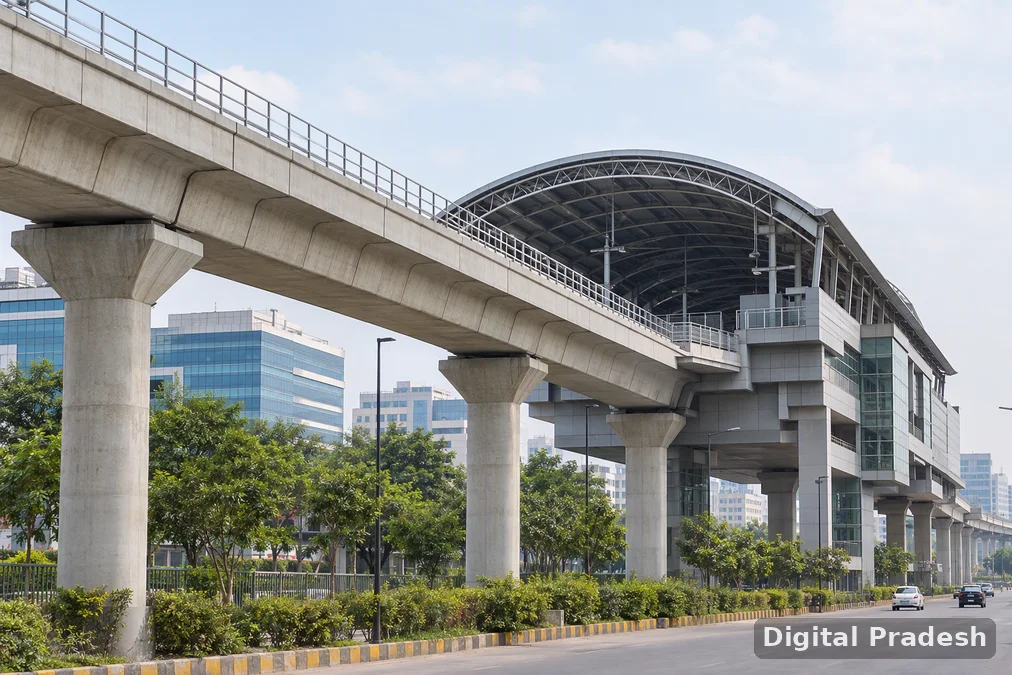
The Pink Line runs from Maan to District Court Metro station, according to the PMO. It will connect with the existing Metro network and provide access between the Hinjewadi employment hub and Shivajinagar.
The Pune Metropolitan Region Development Authority (PMRDA), which undertook the project, describes it as an elevated corridor measuring 23.203 kilometres with 23 stations. Its project description puts the cost, including land acquisition and the shifting of utilities, at Rs 8,313 crore.
PMRDA said it developed the line to address traffic problems around Rajiv Gandhi IT Park in Hinjawadi and nearby areas. The PMO said the connection is intended to improve daily travel for IT professionals and other commuters, while reducing dependence on private vehicles, congestion and vehicular emissions. These are the authorities’ stated objectives, rather than measured outcomes from passenger operations.
The Pink Line’s trains will be operated entirely by women train operators, the PMO said. That announcement concerns train operators; it does not describe the gender composition of the line’s entire workforce.
Around 30 per cent of the line’s total electricity requirements are envisaged to be met through solar power, according to the PMO. The announcement presents this as an intended share of electricity supply, not a recorded level of solar generation.
PMRDA said the project was awarded to a joint venture of TRIL Urban Transport Pvt Ltd and Siemens Project Ventures GmbH. A dedicated project company, Pune IT City Metro Rail Limited, was established to carry it out.
The authority describes the arrangement as a public-private partnership under the central government’s New Metro Rail Policy, 2017. It follows a Design, Build, Finance, Operate and Transfer model, which brings those stages of the project within the partnership structure.
Four corridors planned under Phase-II
Lines 2A and 2B will together cover around 12.75 kilometres, the PMO said. Line 2A will connect Vanaz with Chandani Chowk, while Line 2B will run from Ramwadi to Vitthalwadi, extending the existing east-west network.
The PMO said the eastern extension would improve access to residential, commercial and IT areas in Kharadi and Wagholi. Rather than being a separate, unconnected route, the extension is intended to take the existing network further into those areas.
Line 4 will run around 25.52 kilometres between Kharadi and Khadakwasla. Line 4A will cover 6.12 kilometres from Nal Stop to Manik Baug, according to the PMO.
Across the new corridors, the announcement also identifies Magarpatta, Hadapsar, Swargate, Nanded City, Pune Cantonment and Warje among the areas to be connected. It does not provide a complete station-by-station list.
Interchange facilities at Swargate, Nal Stop and Kharadi Bypass are intended to connect the corridors with the existing Pune Metro network and intercity bus services, the PMO said. Interchanges provide points where passengers can transfer between routes or transport services.
State funding for the east-west extensions
The east-west extensions also feature in Maharashtra’s funding decisions for the 2026-27 financial year. Hindustan Times reported that the state government approved Rs 20 crore as an equity contribution for the Vanaz-Chandni Chowk and Ramwadi-Wagholi/Vitthalwadi corridors. Equity is the government’s ownership contribution to the project, distinct from a loan.
According to Hindustan Times, the two extensions have a combined revised approved cost of Rs 3,626.24 crore, with the state committed to contributing Rs 479.71 crore in equity. The report said they would have 13 stations.
The newspaper reported that the latest Rs 20 crore release would take the state’s total equity disbursement for the extensions to Rs 80 crore, following a Rs 60 crore release on 19 June 2026. Those figures concern the two east-west extensions, not the whole Phase-II package announced by the PMO.
Hindustan Times also reported that the government resolution directs Maharashtra Metro Rail Corporation Limited, known as Maha-Metro, to maintain separate accounts for money received from the Centre, the state government and the Pune Municipal Corporation.

Please log in to leave a comment.


