Union Cabinet: Clears energy storage scheme, 92 GWh support
The scheme will support 60 GWh of pumped storage, 30 GWh of batteries and 2 GWh of alternative technologies during 2026-27 to 2030-31, with capacity allocated through competitive bidding.
In this article
Listen to this article
The Union Cabinet has approved a financial support scheme for 92 gigawatt-hours (GWh) of grid-scale energy storage across India for the financial years 2026-27 to 2030-31, according to the Prime Minister’s Office. The scheme covers capacity yet to be commissioned, spanning batteries, hydro pumped storage and alternative technologies.
The Cabinet, chaired by Prime Minister Narendra Modi, approved the Viability Gap Funding Scheme for Development of Grid-Scale Energy Storage Systems. Viability gap funding, or VGF, is financial support intended to improve a project’s commercial viability. The Prime Minister’s Office said the programme would accelerate storage deployment and help integrate renewable generation into the electricity network.
The approval also sets a minimum domestic content requirement of 40 per cent for battery projects. The government said this would support Indian manufacturing and reduce dependence on imported components, alongside the scheme’s objective of making renewable electricity available more reliably.
Pumped storage receives the largest capacity allocation
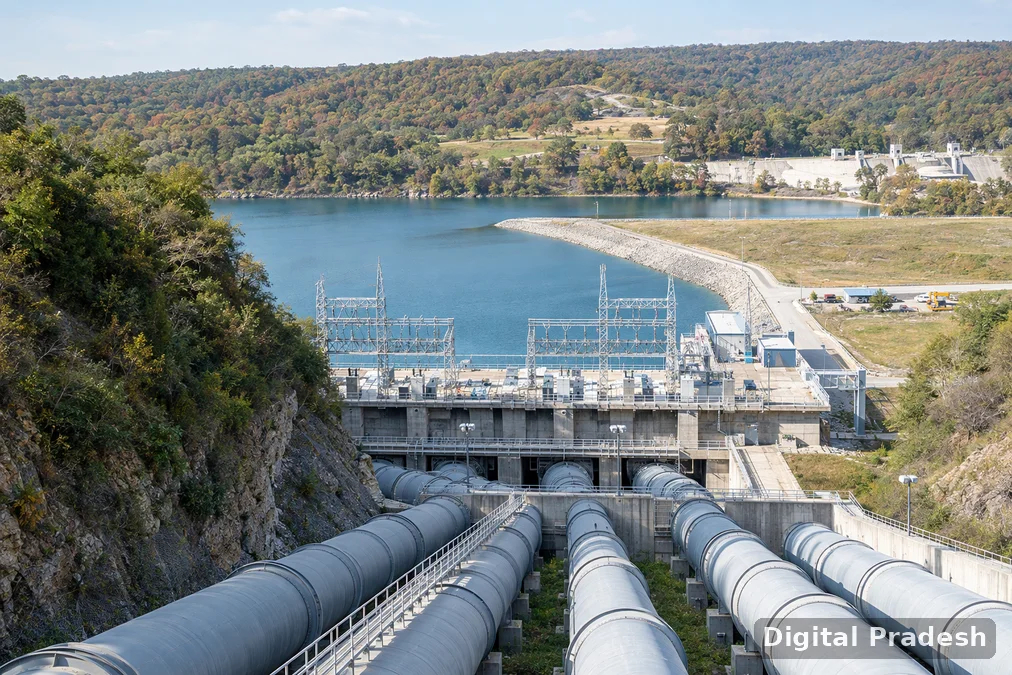
According to the Prime Minister’s Office, the scheme will support 60 GWh of hydro pumped storage, 30 GWh of Battery Energy Storage Systems, or BESS, and 2 GWh from alternative storage technologies.
GWh measures the quantity of energy a system can store, rather than the rate at which it can deliver electricity. Batteries store energy electrochemically; pumped storage uses electricity to move water to a higher reservoir, then releases it through turbines to generate power when needed.
The Prime Minister’s Office said the proposed capacity would help meet India’s grid-scale storage requirement of 411 GWh by 2031-32. That figure is a projected requirement, not a statement of storage already installed.
The Ministry of Power’s National Framework for Promoting Energy Storage Systems, published in August 2023, provides the planning context. Citing the Central Electricity Authority’s National Electricity Plan, it projected a requirement of 411.4 GWh by 2031-32, comprising 175.18 GWh of pumped storage and 236.22 GWh of batteries. The Cabinet announcement uses a rounded total.
Distribution companies eligible for support
Storage capacity under the approved scheme will be allocated through tariff-based competitive bidding, the Prime Minister’s Office said. This means competition on the price offered for the service, rather than an automatic allocation of support to every proposed project.
Public and private electricity distribution companies will be eligible for VGF support for battery and hydro pumped storage projects. Public and private sector entities will implement projects using alternative technologies, according to the announcement.
The government’s stated objective is to help electricity networks accommodate variable renewable generation while maintaining reliable supply. The Ministry of Power’s 2023 framework explains the underlying problem: solar and wind output varies with time and weather, and electricity available during one period may be needed during another.
Storage allows energy to be retained for later use. The framework identifies applications across generation, transmission and distribution, including reducing the need to curtail renewable output, managing peak demand and easing network congestion.
These are intended system benefits, not verified outcomes of the newly approved programme. The Cabinet announcement does not quantify a reduction in consumer electricity bills.
How the scheme differs from battery-only support
The approved programme covers a broader range of technologies than the battery funding measures described by the Central Electricity Authority.
According to the authority’s account, the Cabinet approved a BESS scheme on 6 September 2023 to support 4,000 megawatt-hours of battery projects by 2030-31. It provided budgetary support of Rs 3,760 crore, with VGF covering up to 40 per cent of capital cost.
The authority also records a Ministry of Power order dated 9 June 2025 supporting an additional 30 GWh of batteries through the Power System Development Fund. That programme provided Rs 5,400 crore in support at Rs 18 lakh per megawatt-hour, allocating 25 GWh to 15 states and 5 GWh to NTPC.
The Ministry of Power’s guidelines for that programme required projects to be commissioned within 18 months of signing the relevant storage or power purchase agreement. They also provided for monitoring by the Central Electricity Authority.
The Cabinet announcement for the grid-scale storage scheme does not specify an equivalent per-unit subsidy or project-level commissioning deadline. The earlier programme’s funding rate and timetable therefore should not be read as terms of this approval. Nor does the announcement explain whether any proposed capacity overlaps with earlier allocations.
Domestic sourcing faces manufacturing constraints
The minimum 40 per cent domestic content requirement applies to BESS projects, according to the Prime Minister’s Office. The government describes the measure as demand-side support: subsidised projects would create demand for domestically manufactured equipment, complementing incentives aimed at expanding manufacturing supply.
The announcement does not explain how domestic content will be calculated or certified for these projects, or which components will count towards the threshold.
Those details matter against the constraints identified by ICRA in its December 2025 presentation on India’s renewable energy sector. ICRA cited limited domestic battery manufacturing capacity, a shortage of large-scale engineering, procurement and construction contractors, and dependence on overseas vendors as risks to implementation.
ICRA also said reliance on imported lithium-ion components exposed projects to supply disruptions and potential cost increases. These were sector assessments made in December 2025, not findings about projects awarded under the newly approved scheme.
Battery and pumped storage projects have different risks
ICRA’s assessment identified trade-offs between the two principal technologies covered by the scheme. Battery projects had relatively shorter development periods and lower execution risks than pumped storage projects, it said, but also shorter operating lives and a need for replacement investment.
The agency also highlighted operational challenges for batteries, including meeting performance benchmarks, penalties for delays or underperformance, and the availability of specialist personnel. Financial support addresses project viability; these remain separate delivery and operating considerations.
The Cabinet announcement does not name the technologies eligible for the alternative-storage allocation, specify how financial support will be divided among the three technology categories, or set out project-level funding and disbursement terms.

Please log in to leave a comment.


