Census 2027: Kanpur Dehat page lists December count in UP
Kanpur Dehat's webpage lists Uttar Pradesh population enumeration from 1 December 2026 to 4 January 2027, differing from PIB's April timetable, but also says exact dates will be notified in due course.
In this article
Listen to this article
The Kanpur Dehat district administration’s Census 2027 webpage lists population enumeration from 1 December 2026 to 4 January 2027, setting out a December start for the exercise in Uttar Pradesh. That timetable differs from the February 2027 schedule described in the Press Information Bureau’s national census explainer dated 25 April 2026.
Deccan Herald reported on 5 September 2026 that population enumeration had been advanced to December in four poll-bound states. Its report names Goa, Uttar Pradesh and Punjab for enumeration between 1 December and 4 January. The district administration’s webpage provides official support for the December-to-January dates in Uttar Pradesh.
There is, however, a qualification within the district webpage itself: alongside the specified dates, it retains a statement that the exact population enumeration dates and questions will be notified in due course. The page therefore lists a timetable while also referring to a further notification.
The evidence does not establish a December schedule for all of Uttarakhand. PIB’s April explainer assigned a separate September 2026 enumeration period to the state’s snow-bound areas, alongside specified areas elsewhere in the Himalayan region. That arrangement should not be read as a statewide December timetable.
Population count follows the housing exercise
Population enumeration is the second phase of Census 2027. According to the Kanpur Dehat administration, it will collect information about each individual, including demographic and socio-economic characteristics, education, migration and fertility. Caste enumeration will also take place during this phase.
The district webpage lists Uttar Pradesh’s first phase, the Houselisting and Housing Census, for 22 May to 20 June 2026. It gives 7 May to 21 May 2026 as the preceding period for optional online self-enumeration. These are the dates recorded on the page; the scheduling information does not by itself establish that fieldwork was completed.
The two phases collect different information. The district administration says the housing phase covers the condition of homes, household amenities and assets. PIB’s April explainer describes that exercise as also creating the framework for the subsequent population count.
The Union Cabinet’s statement approving Census 2027 similarly explains that separate questionnaires are used for the housing exercise and population enumeration. It says census workers will visit every household, with state-appointed enumerators, generally government teachers, carrying out fieldwork in addition to their regular duties.
Digital collection does not replace household visits
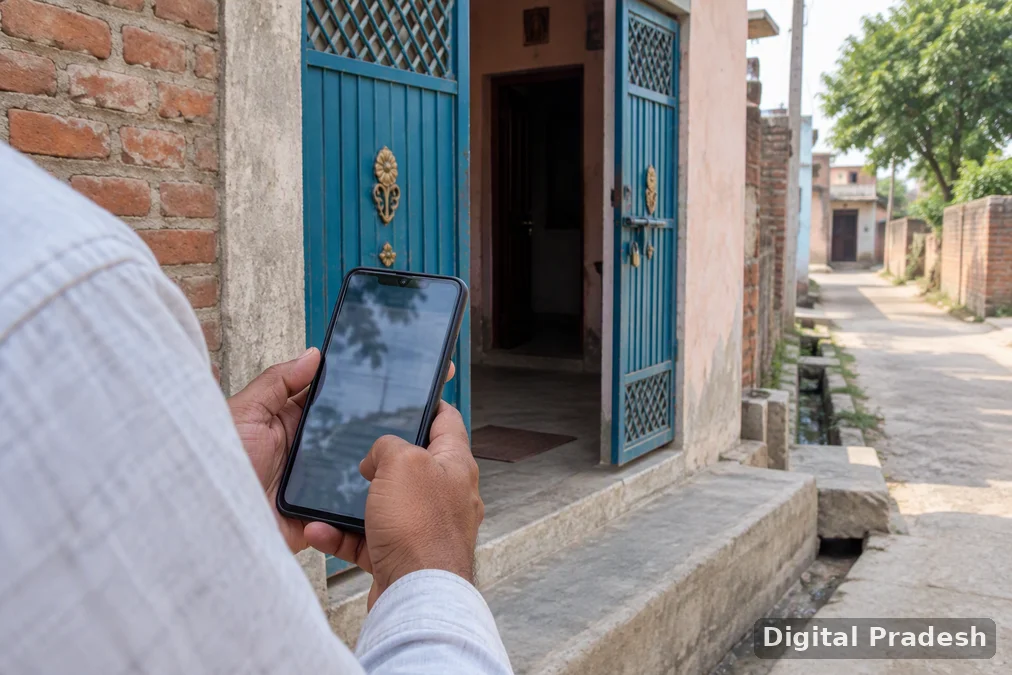
The Kanpur Dehat administration says Census 2027 will use digital data collection, with enumerators submitting information through a mobile application on their smartphones. It also describes an online self-enumeration option for both phases, with the application and portal available in 16 languages, including Hindi and English.
Self-enumeration means respondents can enter their information online before an enumerator arrives. According to the district webpage, successful submission generates a unique Self-Enumeration ID, which is then shared with the enumerator during the field visit.
That option supplements rather than removes door-to-door enumeration. The district administration expressly says enumerators will continue visiting households in their assigned areas. PIB’s explainer adds that information submitted online will be confirmed and integrated by enumerators during those visits.
PIB describes Census 2027 as India’s first census conducted through digital means. Its April document says the Census Management & Monitoring System will allow officials at sub-district, district, state and national levels to track field performance, enumeration progress and operational readiness.
The same explainer describes a mapping application that uses satellite imagery to create houselisting blocks, the areas assigned for housing enumeration. PIB says the tool is intended to support geographical coverage without omissions or duplication. These are the government’s stated purposes for the technology, rather than findings about its performance.
Caste data and the national timetable
The Union Cabinet’s approval statement says the Cabinet Committee on Political Affairs decided on 30 April 2025 to include caste enumeration in Census 2027. It specifies that caste information will be collected electronically during population enumeration, placing it within the individual-level count rather than the housing questionnaire.
PIB’s April explainer placed the main population enumeration exercise in February 2027. It specified September 2026 for Ladakh and snow-bound, non-synchronous areas of Jammu and Kashmir, Uttarakhand and Himachal Pradesh, where the count follows a different timetable.
The explainer also distinguished fieldwork dates from the census reference date: the point in time used to determine who is included in the count. It listed 1 March 2027 at midnight as the main reference date and 1 October 2026 at midnight for the specified Himalayan areas.
Those reference dates describe the framework published in April. Neither the Kanpur Dehat webpage extract nor Deccan Herald’s available report establishes whether the December fieldwork schedule changes the applicable reference date.
PIB says the census due in 2021 could not be conducted on schedule because of the COVID-19 pandemic. The Cabinet’s approval statement identifies Census 2027 as the country’s 16th census and the eighth since independence, with an approved cost of Rs 11,718.24 crore.
For Uttar Pradesh, the district webpage supplies a specific population enumeration window. The outstanding documentary question is how that window will be reflected in the notification that the same webpage says will set out the exact dates and questions.

Please log in to leave a comment.


