RBI Data Centre: Modi inaugurates Bhubaneswar campus
Narendra Modi inaugurated RBI's Bhubaneswar campus, which houses four data centres intended for critical financial systems and an institute for computing and cybersecurity training.
In this article
Listen to this article
Prime Minister Narendra Modi has inaugurated the Reserve Bank of India’s Data Centre and Cybersecurity Training Institute in Bhubaneswar, Odisha, according to an inauguration statement published by the Prime Minister’s Office. Modi said the facilities would support more reliable banking by strengthening computing infrastructure and developing the skills needed to protect financial systems against cyber threats.
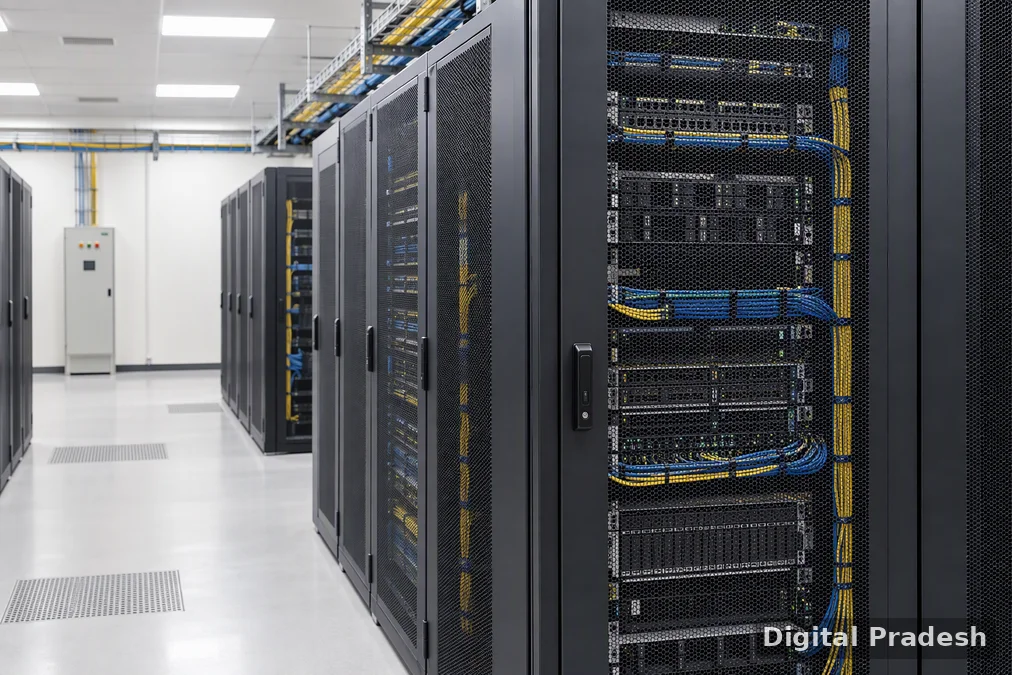
The campus covers 18.55 acres and houses four data centres intended to host critical payment and settlement systems and other RBI initiatives, The Times of India reported. In a separate pre-inauguration report, Akashvani News put the project’s estimated cost at Rs 170 crore.
The inauguration moves the project beyond the planned launch covered in this publication’s earlier report on Modi’s programme involving the RBI facilities. The Times of India’s report, published on 25 October 2026, said the inauguration was scheduled for that Sunday. The Prime Minister’s Office statement confirms that the inauguration took place.
Computing capacity for critical financial systems
The Times of India located the campus at Info Valley near Bhubaneswar, while Akashvani News described its location as Jatni, near the Odisha capital. Citing officials, The Times of India said the facility was designed to meet the RBI’s growing computing requirements and provide secure infrastructure that could expand with its needs.
A data centre houses the computing equipment used to run digital systems and store and process information. In this project’s case, the reported role extends to payment and settlement systems: the infrastructure supporting the movement of money and the completion of financial obligations between participating institutions.
The Times of India reported that the facility was certified to the Uptime Institute’s Tier IV standard, an infrastructure classification concerned with data-centre resilience. The report described the certification as the highest benchmark for data-centre infrastructure and operational resilience.
Those specifications concern the supporting infrastructure, rather than a new banking product for customers. The Times of India described improved reach, efficiency and reliability of digital financial services as expected benefits of the project, not as measured results following its inauguration.
Modi linked the investment to a change in banking priorities. According to the Prime Minister’s Office, he said the preceding decade had focused on bringing banking to people excluded from it, while the coming decade should focus on making services more efficient and dependable. Stronger data centres and computing systems were necessary to protect banking’s digital infrastructure, he said.
Training alongside the technology
The accompanying institute is intended to address the workforce side of that effort. Akashvani News said it would provide specialised training, research and capacity building in enterprise computing and cybersecurity. Enterprise computing refers to the technology used to run an organisation’s operations; cybersecurity concerns protecting systems and information against digital threats.
The Times of India reported that the institute would focus on technologies relevant to banking, financial services and insurance, including artificial intelligence and quantum computing. Akashvani News also identified those subjects as part of its proposed work.
These are described as training and research priorities. Neither report establishes that the campus is already using quantum computing to operate financial systems.
In his address, Modi said changing cyber threats could not be confronted with outdated training arrangements and tools. Modern infrastructure needed to be accompanied by skilled personnel, he said, explaining the role envisaged for the institute.
The Prime Minister’s Office also reported his warning that attacks on an economy could weaken a country. He presented protection of banking systems as a necessary part of India’s economic development, rather than identifying a particular attack that prompted this project.
From foundation stone to inauguration
The project had previously been described as a Greenfield Data Centre and an Enterprise Computing & Cybersecurity Training Institute. “Greenfield” means a newly developed facility, rather than an upgrade to an existing installation.
The Hindu reported that Shaktikanta Das, then identified in its report as RBI Governor, laid the foundation stone in Bhubaneswar. Citing an RBI statement, the newspaper said Das had called for additional computing infrastructure supported by research and training in central banking, technology and cybersecurity. That report also gave the site area as 18.55 acres.
Engineers India Limited subsequently listed completion of the RBI’s Greenfield Data Centre and Training Institute at Bhubaneswar among its infrastructure milestones. The company’s press release dated 18 September 2026 made that disclosure while discussing its business performance and project portfolio.
The company’s completion statement and the Prime Minister’s Office inauguration announcement establish different stages of the project. Neither, by itself, specifies when individual financial systems were transferred to the new infrastructure.
Banking access provides the policy context
Modi used the inauguration to connect infrastructure investment with the expansion of formal banking. According to the Prime Minister’s Office, he cited nearly 60 crore Jan Dhan accounts and said small entrepreneurs, street vendors and traditional artisans had gained access to banking through government programmes.
Those figures were part of his account of financial inclusion, not a measure of the new campus’s users or processing capacity. His argument was that wider access to digital banking must be accompanied by systems that are more reliable and better protected.
The Prime Minister’s Office statement and the inauguration reports do not specify the campus’s computing capacity, the timetable for moving particular payment systems, or the institute’s training intake and course schedule. Those operational details remain outside the published descriptions of the facilities.

Please log in to leave a comment.


