Harajuku Tokyo Cafe: Raises $3 million, plans 10 outlets
Harajuku Tokyo Cafe plans 10 new outlets and central kitchens in Mumbai and Bengaluru after raising $3 million in a pre-Series A round led by Zero W.
In this article
Listen to this article
Harajuku Tokyo Cafe has raised $3 million in a pre-Series A funding round led by Zero W to support outlet expansion and strengthen its operations, ETRetail reported on 22 October 2026. The Japanese food and beverage business plans to add 10 outlets, enter Bengaluru and Chandigarh, and build kitchen capacity to supply its growing cafe and bakery network.
The business operates Harajuku Tokyo Cafe and Harajuku Bakehouse. Founder and chief executive Gaurav Kanwar said it was targeting Rs 100 crore in revenue in the current financial year, according to ETRetail. That figure is a company target, not reported revenue already earned.
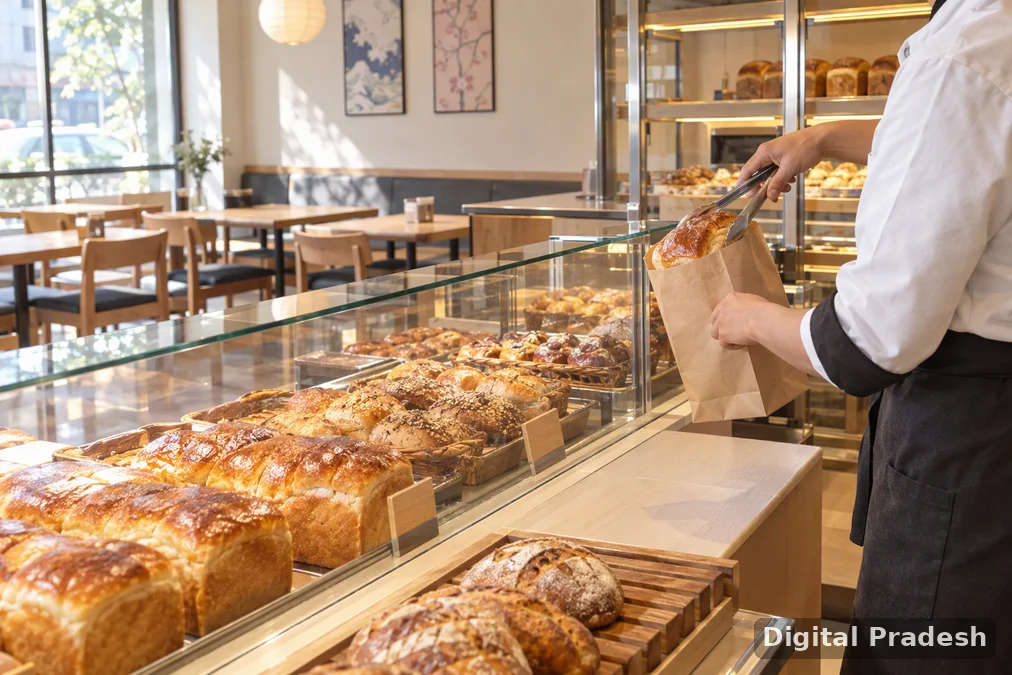
The expansion combines more outlets in existing markets with entry into new cities. Alongside its restaurants, Harajuku is developing a bakery business that sells through outlets and the quick-commerce platform Blinkit, according to ETRetail.
Existing backers join Zero W-led round
Indian Angel Network and Samved VC participated with follow-on investments, while new investors included Blume Founders Fund, Brijesh Parekh Family Office and Epigamia co-founder Rahul Jain, ETRetail reported. Follow-on investment means an existing backer has invested again in the business.
The round is described as pre-Series A, an early-stage funding label rather than a measure of the company’s valuation. Neither ETRetail’s report nor Restaurant India’s account disclosed the valuation attached to this transaction, individual investor contributions or the ownership stakes involved.
Indian Angel Network’s own description of Harajuku identifies it as a Japanese-inspired casual dining and quick-service restaurant chain, with offerings including pancakes, sushi and ramen. Quick-service restaurants focus on serving food with a relatively streamlined ordering and service process.
Hari Balasubramanian, an angel investor at Indian Angel Network, linked the decision to invest again to the company’s progress since its seed round and its reception in Mumbai, according to Restaurant India.
“The response in Mumbai has been particularly encouraging and demonstrates the brand’s potential beyond its initial market,” Balasubramanian said, as quoted by Restaurant India. That assessment reflects an existing investor’s view of the expansion, rather than an independently measured conclusion about demand across India.
Ten outlets and two central kitchens planned
Harajuku plans to open 10 outlets over the next two quarters across new neighbourhoods in Delhi-NCR and Mumbai, while entering Bengaluru and Chandigarh, ETRetail reported. The report did not give a city-by-city allocation or individual opening dates.
The company also plans to make central kitchens in Mumbai and Bengaluru operational by December 2026. According to ETRetail, these facilities will supply bakery outlets and support packaged food production for western and southern India.
Central kitchens prepare products for distribution to multiple outlets rather than leaving all production to each individual location. For Harajuku, the planned facilities form part of the infrastructure accompanying its outlet expansion, not just an increase in restaurant space.
Kanwar said the company had already invested in centralised kitchens and systems that provide daily visibility into outlet performance, ingredients and costs, according to Restaurant India.
“Our focus has been to build the operational infrastructure required to support consistent quality as we expand,” he said, as quoted by Restaurant India.
ETRetail reported that the funding would also strengthen the company’s teams and operating capabilities. Its account did not specify how much of the $3 million would go towards outlets, kitchens, staffing or other expenditure.
Mumbai and Bakehouse contribute to sales
Harajuku said it had doubled both its outlet count and revenue since its seed funding round in August 2025, according to ETRetail. The report did not provide the starting and ending outlet counts or absolute revenue figures, so the growth statement does not establish the current size of the network or its annual sales.
Mumbai, where Harajuku launched in July 2025, contributes 25 per cent of revenue, according to company figures reported by ETRetail. Across dine-in and delivery, the business processes more than 1,000 orders a day, the publication reported.
Harajuku Bakehouse contributes more than 30 per cent of total revenue, ETRetail reported. That figure describes the contribution of a business format, while Mumbai’s share describes a geographical market; the two are not separate categories that can be added together.
In Delhi-NCR, Bakehouse products sell more than 1,000 loaves of bread a week through Blinkit, according to ETRetail. The company plans to take the bakery business into additional metropolitan markets, although the report did not identify a separate rollout schedule for that channel.
Zero W’s investment rationale centres on the operating systems behind those sales channels. Pruthvi, a director at Zero W, said Harajuku combined outlet-level visibility with close tracking of ingredients and costs, according to Restaurant India.
“We believe this infrastructure positions the business to scale, and we are pleased to lead the round,” Pruthvi said, as quoted by Restaurant India. Neither that account nor ETRetail’s report disclosed profitability or outlet-level margins alongside the company’s growth figures.

Please log in to leave a comment.


