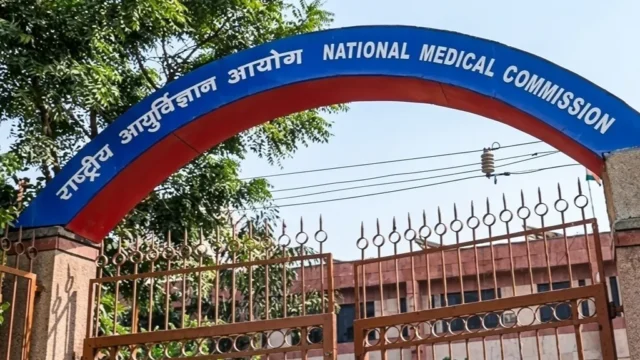
Delhi High Court: DHJS mains reportedly moved to 22-23 October
FreeJobAlert and GovtJobsAlert.in reported that DHJS mains were rescheduled to 22 and 23 October 2026. Those dates have passed, but the available court listing does not confirm whether the papers were held.
In this article
Listen to this article
The Delhi High Court moved its 2026 Higher Judicial Service mains examination from 10 and 11 October to 22 and 23 October, according to FreeJobAlert and GovtJobsAlert.in, which describe a court notice dated 8 October 2026. Both publications reported that the change was made at the request of the Commissioner of Police, Delhi, and that revised admit cards would be issued.
Those revised examination dates have passed as of 26 October 2026. The court’s available updates listing contains two rescheduling notices and an admit-card download entry, but does not establish whether the examination went ahead on the revised dates. The distinction matters: a published examination schedule is not confirmation that the papers were conducted.
The listing itself does not reproduce the rescheduling notices’ contents. The dates and explanation for the October change are therefore supported by FreeJobAlert and GovtJobsAlert.in’s accounts, rather than by the full court notice. Neither account gives a release date for the revised admit cards.
Two reported changes to the mains timetable
GovtJobsAlert.in describes an earlier notice, dated 31 August 2026, which moved the mains examination from 12 and 13 September to 10 and 11 October. The publication attributes that first postponement to traffic restrictions connected with the BRICS Summit.
According to GovtJobsAlert.in, the subsequent 8 October notice replaced that timetable, moving the two examination days to 22 and 23 October respectively. FreeJobAlert gives the same October dates and the same stated reason for the second change: the Delhi police commissioner’s request.
FreeJobAlert reported that the October notice offered no further explanation for the postponement. It also reported that the notice did not address changes to the examination pattern, syllabus or centres. That silence does not establish whether any separate instructions were issued on those subjects.
The court’s updates page lists two entries with the same title concerning rescheduling of the Delhi Higher Judicial Service Mains Examination (Written)-2026. The titles do not identify which entry corresponds to which change. Nor does the separate admit-card entry specify in its title whether it concerns the revised timetable.
Digital Pradesh’s earlier report covered the listing of the DHJS mains rescheduling notice. The reported sequence of postponements provides the timetable context; the court’s recruitment advertisement explains which selection process those notices concern.
Recruitment for 27 advertised vacancies
In its advertisement dated 1 July 2026, the Delhi High Court invited applications for 27 vacancies in the Delhi Higher Judicial Service, comprising 24 existing and three anticipated vacancies. The advertisement states that the vacancy count is subject to change.
The court’s accompanying circulation letter identifies these posts as falling under the 25 per cent direct-recruitment quota. Direct recruitment is a separate selection route from promotion within the judicial service; it does not mean that every post in the higher judicial service is filled through this examination.
The Delhi government’s Department of Law, Justice and Legislative Affairs notification dated 19 February 2026 sets out that distinction. Under the substituted Rule 7 of the Delhi Higher Judicial Service Rules, 1970, entry-level district judge recruitment is divided between promotion, a limited competitive examination for eligible serving civil judges, and direct recruitment.
The notification assigns 50 per cent of posts to promotion based on merit, seniority and suitability, 25 per cent to promotion through the limited competitive examination, and 25 per cent to direct recruitment. These percentages describe recruitment routes, not the category-wise reservation of the advertised vacancies.
What the mains stage determines
The High Court’s advertisement prescribes three successive selection stages: a preliminary examination, the written mains examination and viva-voce, an oral assessment. The preliminary examination selects candidates for the mains; the mains selects candidates to be called for viva-voce.
The court’s updates page lists the complete result of the preliminary examination held on 26 July 2026, as well as the result identifying candidates shortlisted for the mains. It also lists notices concerning model answer keys, objections and deletion of preliminary-examination questions. These entries document the preliminary-stage announcements, but do not establish a mains result.
The advertisement fixed the online application period from 1 to 15 July 2026. It required advocates applying through that route to have at least seven years of continuous practice by the closing date. It also provided qualifying routes for judicial officers, including seven years of combined experience as an advocate and judicial officer.
The advertisement expressly makes admission to every examination stage provisional, meaning that permission to sit a paper does not finally settle eligibility. The High Court said eligibility would be examined at subsequent stages and that candidature could be cancelled if a candidate failed to satisfy the prescribed conditions.
Under the advertised process, viva-voce follows selection through the written mains. The available court listing does not establish whether a mains result or a viva-voce schedule has since been issued.

Please log in to leave a comment.